Coffee Through Grand Ideas: Being Human
It’s easy to connect coffee to being human. We take it beyond the boundaries of biology and organic chemistry and bring it into the circulation of human values. Coffee is the work of our hands, even as it helps define the very hands that make it.


Who is the human being who encounters coffee?
A person who grows it, processes it, carries it across borders drawn on maps, roasts it, brews it, drinks it. Who celebrates it and ignores it. Who works on it or alongside it. Who wakes up and falls asleep.
This is a question of humanness.
The new Red Ink Coffee series, Coffee Through Grand Ideas, asks difficult questions—sometimes surprising, sometimes uncomfortable. In its first installment, we explore the humanness hidden behind the coffee bean. Krzysztof Blinkiewicz, a theorist of The Better Coffee ideology, examines whether recognizing the importance of our own humanness gives us greater agency in our work with coffee.
“I am to write about the human being. But how can I do so when I hear from so many quarters that the human being has died, that the end of the human being has come? Those with even a passing interest in philosophy must have heard such claims.” [1]
I begin with a passage from A Lecture on the Human Being, an essay by the Polish philosopher Barbara Skarga (1919–2009). An extraordinary woman. She came of age under totalitarian rule, in a country torn apart by Hitler and Stalin, witnessing war and genocide firsthand. She survived Soviet labor camps and experienced the violence of fascist, nationalist, and militarist regimes. She saw how easily humanness could be lost. Following her lead, we ask: what allows us to retain our humanness under conditions that work against it?
“The human being” is a universal concept.
Let us consider, then, what is universal to human beings—what belongs not just to me, but to us all. It is easy to say what divides us. We must recognize that although you and I are both human, and therefore share something, we disagree about what that “something” is—as though we were not the same kind of being, as though we did not carry the same thing within us.
“Different people see entirely different things as the core of humanness, and it is exceedingly difficult to judge who is right or where to look for an answer. Perhaps it is madness to search for the essence of the human being.”[1]
What, Then, Connects Coffee People?
Perhaps acceptance of what happens to them. Nothing distinctive. The conformist human being. Following what is widely considered desirable. And accepting that you may want no more than is allowed. Accepting whatever fate brings your way.
Or perhaps agency—the capacity to make decisions, take action, and influence one’s own circumstances and the conditions under which one operates within the milieu, including in relation to others and the Other.
A human being with agency, a human being in subjection.
What is universal: being part of the herd or being alone? Working for the community or for oneself?
Indeed, differences of opinion are “madness.”
We fetishize possession, private property. Different societies have developed different approaches to the common good. In some, what belongs to everyone belongs to no one and is not worth caring for; in others, leaving a scrap of paper on a shared sidewalk is unacceptable. Yet what is mine matters most. Perhaps this “universal” is a lust for ownership. But is this natural?
A fine line between stocking up on essentials and amassing surpluses that exceed our needs on an unimaginable scale.
The simplest answer would be biological: we belong to the same species, share nearly identical DNA, and have a common bodily structure and basic needs—sleep, food, water, shelter from predators or the cold.
“Human beings are, after all, animals that walk upright on two legs, use tools, and belong to different races, with different skin colors, cultures, and levels of development. To study the human being, one must analyze the organism and its responses to natural and artificial stimuli.”[1]
A trivial, anatomical, species-level resemblance.
But does biological community remain relevant in the twenty-first century?
Technological progress—and, above all, inequalities in the resources needed to access it—has created disparities in people’s ability to protect their physical and mental health.
It is true that medical advances—among other factors—have improved the quality of life and extended life expectancy for a substantial share of humanity over the past century.
The inability to afford treatment or reach hospitals and other properly equipped medical facilities, shortages of qualified healthcare workers, lack of access to drinking water and uncontaminated food, life amid armed conflict, recurring natural disasters, or famine, exposure to hazards from chemical plants, and work in dangerous conditions rob people not only of well-being but also of the hope of attaining it.
A matter for futurology, or the near future? Human beings will no longer share even a “universal” biology and anatomy.
We are already seeing the first attempts to push the biological limits of the human being. Does Bryan Johnson ring a bell? He is the subject of the 2025 documentary Don’t Die: The Man Who Wants to Live Forever, available on Netflix. The tech multimillionaire follows an extremely rigorous anti-aging regimen and has experimented with gene therapy, stem cell treatments, plasma treatments, and intensive biomarker monitoring, among other interventions.[2] Johnson treats his body as a project—one in which aging can be pushed further and further into the future.
“We want the ability to re-engineer our bodies and minds in order, above all, to escape old age, death and misery, but once we have it, who knows what else we might do with such ability?”[3]
Contrary to sweeping claims in the media, isolated cases involving medical interventions like his do not justify claiming that humanity as a whole is on the verge of immortality—or even a radically longer life.
For coffee people, then, what is universal may be mortality and a lack of access to healthcare sufficient to meet their basic need for health, let alone attain well-being.
“Though the details are therefore obscure, we can nevertheless be sure about the general direction of history. In the twenty-first century, the third big project of humankind will be to acquire for us divine powers of creation and destruction, and upgrade Homo sapiens into Homo deus,” Yuval Noah Harari observes in Homo Deus: A Brief History of Tomorrow.[3]
 Krzysztof Blinkiewicz

When I speak of coffee people, I mean people whose lives or work are directly or indirectly connected to coffee.
Their milieu—the environment and full range of conditions in which coffee people live, work, and take action—encompasses far more than bodily matters and health. It includes material, social, economic, political, cultural, and natural conditions, along with the relationships that shape their circumstances and possibilities for action.
Work may be the key to understanding what constitutes humanness. Many philosophers, including Georg Wilhelm Friedrich Hegel, Karl Marx, and those who followed them, have looked to work and the relations of production for the basis on which social relations are organized—and continue to do so.
So what is “universal” to coffee people would be working with coffee. Does that define their humanness? I very much doubt it. I stand by The Better Coffee’s catalog of values, which states plainly: “Work is a break from rest, not the other way around.” And further: “Every person has the right to live without being compelled to work and to have their needs met regardless of employment status, work performed, or readiness to work.”[4]
 Krzysztof Blinkiewicz
And elsewhere: “Those who do the work should share in decisions about its organization and purpose and share responsibility for both.”[4] That would mean work is subordinate to the human being, rather than the other way around. And here we return to agency, mentioned earlier, as a possible universal feature of humanness.
But what is agency under the prevailing consensus? The paradigm at work within the milieu rests on an alliance between adaptive liberalism and representative democracy, both subordinate to the logic of capitalism—which must be recognized as a widespread and, even today, universal economic, political, and social order.
Agency is thus constrained by the paradigm’s boundaries. A person’s ability to recognize their own agency is constrained by the cognitive frame that arises from the consensus.
Does such a profound constraint on agency at this point in history—as at many points in recorded human history—define humanness, or deprive us of it?
So far, we have asked whether what is universal might be conformity or agency; life in community or solitude; working for the community or for oneself; ownership and the sense of having enough; care for the common good or indifference to it; the accumulation of resources; belonging to the same biological species and sharing basic needs; mortality; the need for health and well-being; living and working within the milieu; the subordination of the human being to work, or of work to the human being; life within the bounds of the prevailing consensus; or, finally, work itself. Let us now consider what connects agency and dignity—and whether AI, a climate catastrophe, or total war will take both from us, along with our humanness.
Keep Red Ink Coffee in circulation
If this essay gave you something worth carrying forward, support our work by selecting Donate below.
The button opens our secure donation panel powered by Stripe.
The Manipulation of Human Dignity Continues
From different quarters—those who hold power and groups demanding it—we hear different definitions of human dignity.
If, for the discussion that follows, we take dignity to be the universal attribute that confers humanness on us, then to violate dignity is also to strip human nature of its special status.
A person who is oppressed, exploited, and left with no way out by a particular form of power and politics can often summon extraordinary physical and intellectual effort to fight for recognition of their natural right to equal respect and to respect for their moral autonomy.
Pope Leo XIV, recalling Pope Francis, wrote in his encyclical Magnifica Humanitas: “He pointed out that when reason seriously examines human nature, it is capable of discovering values that apply to everyone, since they derive from human nature. If this task of inquiry were abandoned, it is conceivable that rights considered untouchable today might, in the future, end up being questioned or denied by those in power, perhaps after having obtained only an apparent consensus from populations that are frightened or manipulated.”[5]
I understand these words this way: a person who neither seeks nor defends their humanness puts themselves and others at risk of finding it increasingly difficult to meet their needs—not only the need to have their subjectivity recognized by others and the Other, but all their other needs as well.
We have surrendered power over our own dignity. No one asked whether we consented. The consensus dictated the terms, and we—humanity—are expected to submit peacefully. To stand against it, even in defense of equality or human freedom, even in defense of dignity and respect for our bodies and the time we have to live, is to stand against... humanity.
We have arrived at a consensus that is hard to break, with a paradox at its heart. It suits those who grow rich and enjoy well-being without concern for the millions dying of thirst, hunger, and diseases that are curable elsewhere.
On October 31, 2021, Elon Musk, then the world’s richest person, wrote on Twitter:
“If WFP can describe on this Twitter thread exactly how $6B will solve world hunger, I will sell Tesla stock right now and do it.”
Musk was responding to the World Food Programme’s warning that roughly 42 million people in 43 countries were at risk of famine and needed urgent assistance. WFP published a $6.6 billion plan on November 3 and presented it directly to Musk two weeks after his post.[6] In May 2022, WFP’s executive director said the agency had received none of the money from him.
If care for others were universal to humanness, we would have another example of how possessing wealth beyond reckoning runs contrary to nature.
Tech oligarchs are a new form of an old oligarchy: people whose power comes from the concentration of capital and control over the technologies and infrastructure on which societies increasingly depend. Their influence extends beyond the economy into politics, communication, and the conditions of everyday life.[7]
 Krzysztof Blinkiewicz
It would never occur to me to call for tech oligarchs to be stripped of their dignity or civic rights. I call only, on my own behalf and on behalf of other coffee people, for more equal access to the resources we exploit beyond planetary boundaries—so that recognition of our personhood, our agency, and our authorship of our own lives is matched by a real ability to meet our needs and attain well-being.
Scrooge McDuck, one of the richest characters in Disney comics, amassed an unimaginable fortune and still saved every penny. In Duckburg, he owned a gigantic money bin filled with coins and bills, through which he literally swam as if it were a pool. Money became more than a means of meeting his needs: it gave him an almost physical pleasure and became an object of obsessive attachment. In his 1952 comic Only a Poor Old Man, Carl Barks portrays this peculiar relationship between wealth, possession, and the fear of losing it.[8]
At the same time, most coffee people live in unrelenting fear for their future. Climate change is galloping ahead. We have passed the point of no return; all that remains is the work of repair. Even when we want to act, we often feel that our efforts will bring us nothing but harm. We speak to others, but the Others remain passive and powerless.
I love the film Don’t Look Up, with Leonardo DiCaprio as Dr. Randall Mindy, a neurotic astrophysicist who, together with his student Kate Dibiasky, warns humanity that a comet will end life on Earth in a matter of months—or perhaps only weeks.[9] Writing about the film in Too Late to Awaken: What Lies Ahead When There Is No Future, Slavoj Žižek observed:
“What we get in today’s cynical functioning of ideology [consensus—editor’s note] is interpassive nonknowledge, the other DOESN’T know for me—I comfortably dwell in my knowledge because I can ignore it through the Other. This is what happens with today’s liberal establishment: much like in Don’t Look Up (2021), the elites know what is happening (catastrophe is inevitably approaching), yet they fail to act on that knowledge, shifting their ignorance onto the Other—the comet deniers.”[10]
Passivity and ignorance, then, are universal to humanness. We focus on one problem and fail to solve it.
 Krzysztof Blinkiewicz
We can recall many such objects of humanity’s fixation: problems we contemplate without solving, and sometimes even celebrate blindly. Toward the end of the last century, one was Francis Fukuyama’s “end of history”[11] and his celebration, at the time, of liberalism and democracy’s victory over Soviet-style authoritarianism—a position he later abandoned. Or perhaps it was the fear of AIDS, the internet boom and the spread of computers, or the hole in the ozone layer (which still exists, its size changing with the seasons and from year to year). Globalization. Then, after the September 11, 2001 attacks in the United States, attention shifted to the fight against terrorism. Next came the financial crash. Stock markets plunged; banks failed, and even countries such as Greece went bankrupt. Smartphones transformed how we relate to one another. Social media. Climate change—much discussed, with little done to prevent it and more effort spent repairing the consequences of decades of neglect. Then came the COVID-19 pandemic. I don’t know about you, but in Europe, the pandemic vanished "overnight" when Russia invaded Ukraine.
Slavoj Žižek writes at length about this in the book mentioned earlier, arguing:
“We always—by definition—begin solving problems too late, for one simple reason: the only alternative would be to prevent the problem from arising in the past. Yes, we should fight racism, but we can only do so once we have allowed racism to emerge.”[10]
We have a right to Hope—to believe that our own actions, and events beyond our control, may solve problems and bring an end to deprivation, inequality, and bondage. The Standard reminds us: “The fundamental dimension of hope is revealed in community. In a relationship with another person, hope sustains openness to their well-being, their moral and spiritual transformation, and the renewal of the relationship.”[4]
Once again, we return to humanness as community.
Divided Within Cognitive Frames
Respect for the human being prevents us from treating passivity as universal and natural. Seen through the philosophy of history, the passive human being would long ago have been erased from the history of life. Had we remained passive, we would not have reached this point in technological or social development. And yet, as Adrian Johnston wrote in Capitalism’s Implants: A Hegelian Theory of Failed Revolutions:
"We know things are broken. We know what needs fixing. We even sometimes have ideas about how to fix them. But, nevertheless, we keep doing nothing either to mend damage already done or to prevent further easily foreseeable damage."[12]
Looking at The Better Coffee—as an ideology, a system, a way for coffee people to work, a shared language, and a form of political action—I see this with redoubled force.
Coffee people are often painfully aware of the bleakness of their circumstances. Contrary to what coffee industry commentators often claim, these problems do not affect only oppressed farmers.
At times, it is almost absurd to single out “the farmer” as the person most harmed, as though, in many coffee-producing countries, the people who work for that farmer were not in an even worse position. In their own way, farmers are often closer to meeting their needs, and many even enjoy well-being. We know “farmers” in Panama and elsewhere who live truly comfortable lives. Their coffees often win competitions and championships through the hands of baristas, and fetch astronomical prices per kilogram or per lot at auction.
Yes, coffee people are no less divided than the others.
One reason for this is symbolic capital. It is capital socially recognized as legitimate, taking the form of prestige, credibility, or authority and giving its holders influence over relationships and access to resources within the milieu. Indeed, if we look at coffee people through the economic conditions of their milieu, we can see that they may experience their own circumstances through images of others who work with coffee, but also through the language of economics they inherit, the norms of work, and social expectations. In a Lacanian reading, this second level can be understood through the Other. This raises the question of how far a person comes to regard conditions imposed on them as natural and as their own.[13]
We see a farmer whose coffees sell in the “West” or the “North”; a roastery whose coffees sell around the world; cafés growing into chains and attracting corporate interest; beautiful interiors on Instagram; national and world champions in disciplines we practice ourselves.
Within our information bubble, we are bombarded with so many messages bordering on illusion that we begin to believe them and accept them as normal. And notice that each of the forms of “looking up to others” mentioned in the previous paragraph is most often rooted in a difference in the capital they possess.
Not long ago, a World Brewers Cup competitor who finished second in the world championship boasted on social media that “we spent A$209,000 preparing to brew 6 cups of coffee.” Ask yourself, coffee person: why are you not competing in the World Championship final? Why blindly believe that “anyone can compete” and that one day you will be able to afford the authority, reputation, or prestige the coffee industry treats as something almost “above dignity”?
Why do we feverishly try to catch up with a world of illusion and symbolic capital—and real capital, too—for the sake of perhaps momentary fame and fleeting financial success, instead of turning the fever of our actions toward the shared challenge of improving our circumstances?

I am not here to offer advice, but I can quote The Standard—take it as a hint about what you are entitled to as a human being.
“Every person has the right to experience hope and to expect that good can come about. Social relations should be directed toward fulfilling this expectation.”[4]
The point, then, is not to abandon hope for change, but to seek its fulfillment in the pursuit of well-being rather than prosperity, in cooperation rather than competition. Ultimately, it means seeking more than the fulfillment of your own needs: it means recognizing that other coffee people must also have their needs met.
Remember, too, that “Another person becomes a need in their own right.”[4]
So far, we have moved from agency to dignity, from dignity to power, and from power to wealth, fear, and passivity. Hope has led us back to community. Let us now ask how this shared humanness becomes subject to power.
Prolonged submission to power—whether exercised by people or legitimized by the consensus itself—can make bondage appear to be a natural condition of life. Comfort, consumption, the fulfillment of needs, or attachment to community may hold back committed resistance.
By abandoning the effort to seek our own humanness, we seem to consent in silence to being ruled with ease by those in power.
Michel Foucault (1926–1984)—a French philosopher and historian of ideas who studied the relations between power, knowledge, and social institutions—taught us: “Power is exercised only over free subjects, and only insofar as they are free.”[14]
We are free to recognize the historical contingency of an order previously treated as self-evident, while the boundaries of what is considered permissible, rational, or realistic can themselves become objects of our resistance—or consent. Power is subject to these cognitive frames.
But what happens when we are not even aware of whose power we are subject to? It is trivially easy to mistake manipulation of our cognitive frame for a decision of our own. Social engineering techniques, deployed through the advertising that bombards us, compel us to make particular consumer choices. They help shape our needs, desires, and images of ourselves and other people. Our dreams and expectations. They often impoverish us in the name of one new or unnecessary product and service after another.
Remember The Truman Show (1998)?
Truman Burbank, played by Jim Carrey, has lived inside a vast television set since birth, unaware that his entire life is a reality show. He grows up, falls in love, gets married, works at a bank, and meets neighbors and friends. Even the trauma of his father’s death during a storm, which leaves him terrified of leaving the island, is part of a world designed to keep him inside.[15]
His life was literally written by Christof—the show’s creator and director. For almost thirty years, Christof controlled this world. Truman’s family, his wife, his best friend, and random passersby are all actors. Truman makes seemingly independent decisions, but he does so within a reality whose boundaries, rules, and true nature remain unknown to him. More than that: he has no idea they even exist. Until he does.
The film is a comedy-drama, but it poses a very serious question: can a human being be free if someone else designed the framework within which they make their choices?
And what if every human being is a little like Truman? We live within cognitive frames that we usually did not choose for ourselves and, for the most part—once again raising the question of what is universal to humanness—do not even notice.
Cognitive science reminds us that cognitive frames are something like the invisible stage set of cognition. They allow us to function without constantly questioning everything, while also defining the limits of what we are able to perceive and think. Like Truman, we may spend years making real decisions without knowing that part of the world in which we make them was constructed in advance.
What Belongs Not Just to Me, but to Us All
Water, food, nature, land, air, sunlight, seeds, space, knowledge—it would seem that all of this belongs to us.
Yet it has been appropriated.
And ravaged.
You know how this works on Earth. But did you know that outer space, too, is not held in common? It has already been almost entirely privatized. More than 20,000 satellites now orbit us continuously, while almost as many objects are pieces of space debris.
Well over half of all functioning satellites are part of Starlink, a network operated by SpaceX, the private company controlled by Elon Musk. Even conservative projections suggest that the number of satellites orbiting Earth will at least double over the next fifteen years, while more expansive scenarios indicate that it could grow severalfold by 2030.
The consensus, acting through tech oligarchs, has already privatized one of humanity’s greatest achievements: the public square. It has moved the meeting place into a realm where one person can encounter another without physical contact.
Mark Zuckerberg—the CEO of Meta Platforms, whose products include Facebook, Instagram, WhatsApp, Messenger, Threads, and many others—“has unilateral control over 3 billion people,” as whistleblower Frances Haugen said during a 2021 hearing before a committee of the British Parliament.[16]
As we search for what is shared by humankind, and for what ought to belong to humanity as a whole, we quickly discover that the limitless accumulation of capital and power deprives us not only of ownership of the commons, but of any influence over them at all. Whatever I do, I will not stop climate change; I will not clean the air, the water, or the soil—you have said this more than once. “You cannot save the world alone.” More than that: even collective action becomes impossible when agency itself has been privatized by the few. Where, then, is the threshold at which a united humanity will recognize that we ourselves are turning our home into a place where life is no longer possible? Will we—and if so, when—recognize real responsibility, rather than passive mourning, as universal to humankind?
A barrier may be something that artificially closes us in; a boundary, by contrast, points to what lies beyond it—that which is different, foreign, and sometimes perceived as threatening—and therefore also provides a sense of security.
Are cognitive frames our barriers, or are they boundaries beyond which we can glimpse what lies “on the other side”—our own Upside Down, as in Stranger Things, populated by alternatives? Some are more humane than the world you know; others are far more polarized and unjust.
Human beings have the capacity to recognize barriers and boundaries, including through awareness of their own cognitive frames. They can name, describe, question, and sometimes cross them. This appears to be what Leo XIV meant when he wrote of discovering “values that apply to everyone”: they are easier to see when you are not trapped inside The Truman Show.
And it is precisely here that the question of knowledge begins to merge with the question of freedom. The search for humanness finds itself reflected in a mirror: am I free enough to search at all?
Technocrats Will Take Your Coffee Away
CLD names capitalism, liberalism, and democracy as the fundamental order structuring human relations and life. The Better Coffee argues that specialty is nothing more than one of its subparadigms—one that organizes the cognitive frames of coffee people.
The technocratic subparadigm and certain currents of posthumanism are likewise part of the dominant order.
For them, the human being ceases to be an end and becomes material: a resource to be optimized, a unit to be measured, an object to be manipulated.
A project.
In Magnifica Humanitas, Leo XIV writes of an increasingly visible process of eliminating everything “that places limits on the maximization of profit: what matters is efficiency, not respect for the freedom and dignity of the human person.”[5]
Some currents of posthumanism even entertain a vision of “second-class” people, subordinated to elites that consider themselves more advanced, more capable, or more valuable. In doing so, these currents begin to speak a language dangerously close to that of the fascist, nationalist, and militarist ideologies of the twentieth century.
This creates a hierarchy of human worth and systematically denies people their humanness.
We can now see power and wealth becoming increasingly concentrated in the hands of a relatively small group—mostly men. They monopolize technological power. Even states and communities now draft regulations around the fear of “offending” corporations.
The material basis of technological power lies in resources: infrastructure, computing power, energy, cobalt and other critical minerals—including rare earth elements—and the vast quantities of water required, among other things, to cool data centers. This creates a particularly brutal contrast in a world where access to safe water is still far from universal.
Matt Damon, actor and co-founder of Water.org, puts it plainly: “You cannot solve poverty without solving water and sanitation.”[17]
The same concentration of resources gives a handful of entities power over people. Control over platforms, data, and digital infrastructure allows them to decide who is granted access, who remains visible, who is excluded, and on what terms a person may participate in digital reality. This is no longer merely a question of technology. It is a question of power over the conditions in which people can act.
Things have gone further than one might imagine. Mark Zuckerberg is now selling smart glasses equipped with cameras and microphones that record their surroundings, as well as an AI assistant capable of analyzing what they see and answering the user’s questions. The latest models feature a display built into one lens, allowing users to view information, messages, and navigation directions without reaching for their phones. The same corporation is building the metaverse—apparently seeking to bring even what we consider the real world under its control.
Let us consider: how much does the quality of your coffee matter when you sell it online? Here, quality is understood as a description of the coffee’s properties derived from simultaneous measurement-based, sensory, and ethical analysis. The question therefore runs deeper: how much do the measurable properties and sensory perception of your coffee matter, and how much do the economic, social, and environmental conditions of its production and circulation—conditions that you help shape—matter?
Let us venture an answer: its quality matters far less than the reach of the message announcing that your coffee is for sale. Platform algorithms shape the outcomes of your work more than you do, coffee people.
Commercial data, transactions, communication, marketing, access to customers, product visibility, knowledge, and a growing share of business decisions all pass through digital infrastructure owned by a small number of entities.
Technocrats are taking away your coffee, your work, and your ability to meet your needs. They take a cut of every sale and profit from shipping and advertising. Without paying them, it is genuinely difficult for coffee people to sell their products and services today.
We are reduced to a cookie in a browser, a record in a database, a user of someone else’s infrastructure, a consumer profile, or a resource to be optimized.
For coffee people, the technocratic paradigm imposes even harsher conditions under which they can work, sell, buy, communicate, and help decide their own future.
One of the hottest topics of 2026 is the accelerating development of AI. People speak of the modern pagans of Silicon Valley—followers of a peculiar para-religion. They believe in the imminent arrival of superintelligence—a being that will surpass human cognitive capacities and find solutions to problems humanity has been unable to solve for centuries.
Forecasts of technological development replace ancient prophecies; a vision of a world governed by an intelligence superior to our own replaces the promise of salvation. Its arrival is presented as a historical inevitability, almost as the next stage in the evolution of humanness.
Humanness is already being asked to entrust its fate and future to something—someone?—that does not yet exist and whose actions it may not even be able to understand. Technology companies are pouring fortunes into making that prophecy come true.
There is, however, hope that humanity still retains some instinct for self-preservation.
In early November 2026, a wave of protests swept across Europe against the expansion of data centers, driven in part by the development of artificial intelligence. The Stop Dirty Data Centres coalition recorded around 90 events across 15 countries.
 Krzysztof Blinkiewicz

In Amsterdam, protesters entered the construction site of a Microsoft data center, and police detained between 150 and 200 people. In Zaragoza, Spain, around two thousand people marched. The protesters are demanding a halt to new large-scale developments.[18]
Their aim is collective control over the development of data centers and AI itself. They invoke shared responsibility for energy and water resources, for the environmental costs of that development, and for its effects on local communities. They are demanding that the commons finally be recognized as... commons—belonging to humankind as a whole.
The question of agency therefore returns: does waiting for superintelligence become yet another way of postponing responsibility for a world we are already capable of changing? And would curbing the development of artificial intelligence truly be an exercise of agency?
We can already see how AI threatens human dignity—not only as a technology capable of multiplying the power of existing structures, but also as a widely available method for analyzing people, classifying them, and predicting their behavior. It can support decisions concerning work, credit, access to services, information, or visibility. The more of these decisions we hand over to algorithmic systems, the more easily a person is reduced to a collection of data points, probabilities, and categories.
AI models already determine people’s fates. They can make us safer while also taking away our freedom.
The danger to humanness does not begin when a machine acquires a will of its own. It begins when human beings cease to exercise theirs, surrendering judgment, responsibility, and agency to systems whose operating principles they often cannot even see.
Within the technocratic paradigm, artificial intelligence can become an exceptionally effective instrument of dehumanization—precisely because it operates quickly, at scale, and under the guise of objectivity.
Once again, we fetishize possession and private ownership. Perhaps collective ownership would be more reasonable: placing water, food, shelter, knowledge, and data under the control of societies founded on equality and dignity.
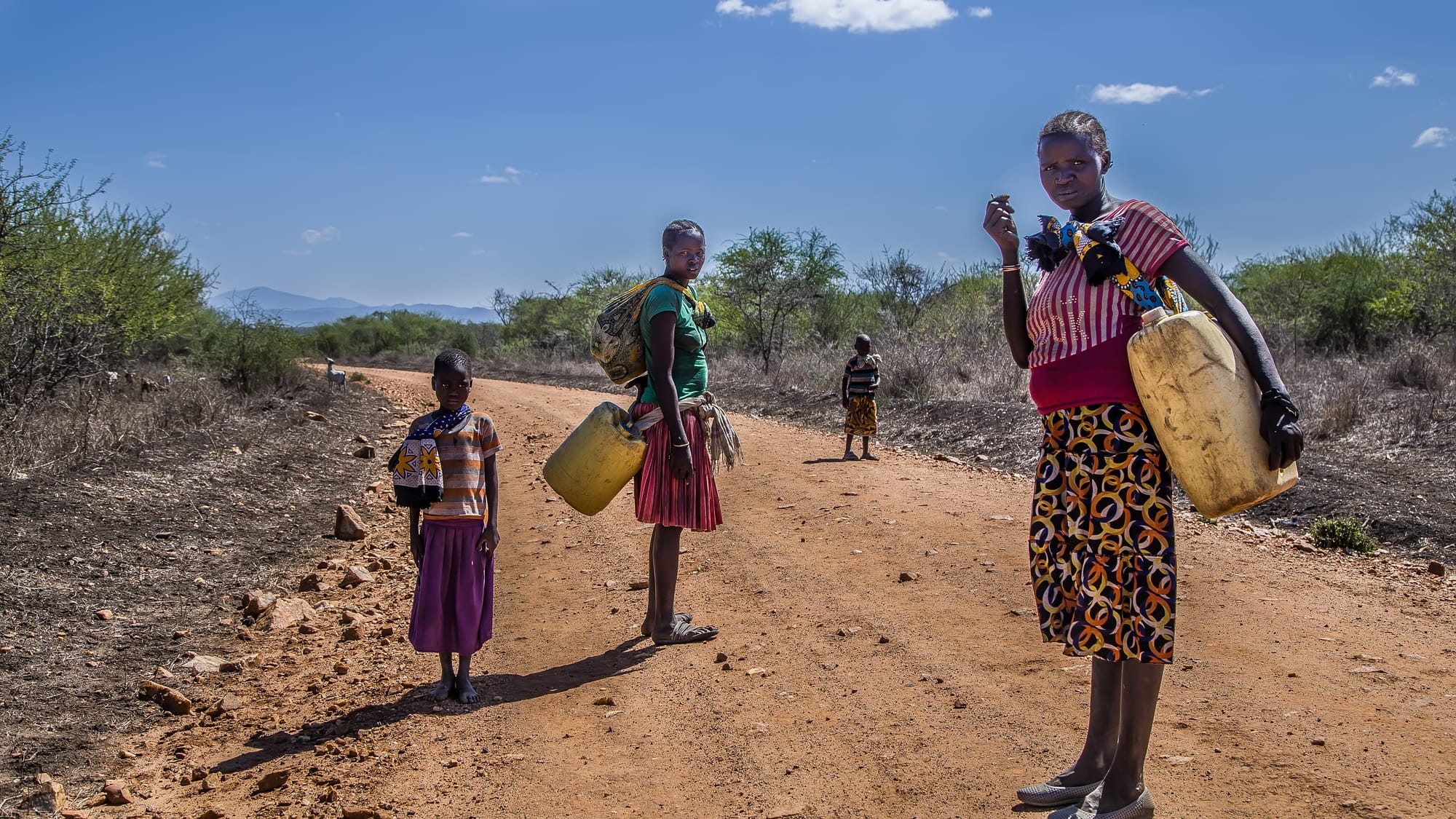
Coffee will not survive without water, healthy soil, and clean air; and without coffee people who are fed, hydrated, healthy, clothed, and housed, we will not get so much as a sip.
The Madness of Differences, a Community of Mementos
“A human being is not a beautiful animal,” Barbara Skarga said.[19] I would say, rather, that the human being is beautiful, but highly susceptible to the beliefs of the Other—and therefore often does does unbeautiful things.
Perhaps this is how it is: humanness contains something universal, yet humanity acts against it—living in an unnatural state. Or perhaps that universal element is dispersed, while pluralism within the consensus shapes our attitudes, including our ethical ones.
After all, political theorist and philosopher Hannah Arendt (1906–1975) wrote: “Plurality is the condition of human action because we are all the same, that is, human, in such a way that nobody is ever the same as anyone else who ever lived, lives, or will live.”[20]
Do not expect this essay to answer the question: Who is the human being who encounters coffee? Use it instead as an invitation to conduct your own inquiry, reflect on yourself, and look more deeply into your milieu and the consensus we share. What you can expect is a set of frames for understanding The Better Coffee and the role of coffee people within this system, language, ideology, and set of values.
Actions can take many forms.
Meet beyond the feed
Create an account on Matrix + Element and enter the shared space where coffee people talk, organize, cooperate, and work together:
In the Bhagavad Gita (3.5), Krishna tells Arjuna: “Because, no one ever remains even for a moment without doing work.”[21] The key term here is the Sanskrit karma, meaning action in a much broader sense than work, especially paid work. A human being acts when they create, rest, make decisions, care for others, and even when they refuse to participate in something they consider wrong. Action is inseparable from human life, but equating it with work subordinated to economic demands would already be an interpretation imposed by a particular social order. We may therefore recognize action as one of the universal characteristics of humanness without making work its measure.[21]
From the perspective of biology, a similar idea is offered by Paul Nurse, winner of the 2001 Nobel Prize in Physiology or Medicine. In What Is Life? (2020), he writes: “Living organisms stand out because they are things of action; they behave with purpose, reacting to their surroundings and reproducing themselves.”[22] Action thus appears to be a characteristic of life itself.
Better looks toward the future. In what direction will humanity steer its actions?
In Future Stories: What’s Next? (2022), historian David Christian attempts to look a hundred years into the future by drawing on knowledge of the past. He distinguishes four possible scenarios for humanity: growth, downsizing, collapse, and sustainability.[23]
Each carries different consequences for coffee people and humanity as a whole, and none guarantees a safe future.
Christian reminds us that we know the future only through traces of the past, while our visions of it remain uncertain. Here his thinking meets that of Slavoj Žižek—let us recall: “We always—by definition—begin solving problems too late.”[10]
For coffee people, the final scenario should be of particular interest: the possibility of reorganizing human activity so that the future of societies can be reconciled with the limits of the biosphere.
At first, unchecked global growth may seem enticing to coffee people—if you still expect more than you have now to trickle down from the tech oligarchs’ table. False hope. What this path is more likely to deliver is the rapid extinction of coffee, for yourselves and everyone else, through climatic and political upheaval. Unemployment?
And here, once again, a few words about agency. Humanity has acquired the capacity to affect the planet on a scale that gives today’s decisions significance for thousands, perhaps millions, of years. The direction we take will be determined, to an enormous extent, by politics. But does politics belong to the community, or does it merely create the illusion of participation? The future we choose depends on a political breakthrough: people denied a voice reclaiming it and joining in the shared naming of political reality.
Yes, our past and present actions can alter Earth’s climate for tens or even hundreds of thousands of years. In 2025, researchers at Cardiff University showed that, if the climate were governed solely by natural orbital cycles, the next glaciation could begin in approximately 10,000–11,000 years.[24] Anthropogenic carbon dioxide emissions, however, have already altered this trajectory. Depending on the model used and future emissions, the next glaciation may be delayed by further tens or even hundreds of thousands of years.[25, 26] A human life lasts only a few decades, yet human action can now alter the rhythm of the planet on a geological timescale. Still, we exercise no collective control over that power: decision-making has been privatized and entrusted to authorities that determine not only our fate, but that of our distant descendants.
Perhaps it is high time to gather mementos of this planet—prosperous and idyllic, or so most people believe—and of a humanity that still knew the quasi-peaceful coexistence of nations, some semblance of political diplomacy, a catalogue of human rights seemingly made to be broken, unpredictable and devastating typhoons and mudslides, the privatization of power, pandemics caused by deadly coronaviruses, and limited access to water and food.
To pack these mementos into a capsule made from rare yet durable minerals—the struggle for which matters more today than human life—and bury it somewhere in melting Antarctica.
Curiously—and, in its own way, romantically—perhaps collecting mementos is universal to humankind.
A stone brought back from a journey, a shell from the seashore, an object that belonged to a loved one—we keep them because they allow us to return to our own past. In the article Homo Memorabiliaxis, published in 2026 in Evolutionary Anthropology, researchers hypothesize that the practice of collecting such objects may date back some 500,000 years and may have contributed to the evolution of autobiographical memory and the sense of self. As the authors write: “an object that indexes its owner’s past requires no shared convention, no agreed meaning, and no audience.” A memento can therefore tell a person’s story even when only that person understands its meaning.[27]
Humanness, too, may be found in our gathering of mementos.
Into the Streets or Across Boundaries
The contemporary radical right readily employs the language of freedom, sovereignty, and resistance to state coercion. Within the American MAGA movement, Poland’s Confederation, Marine Le Pen’s National Rally in France, and Germany’s AfD, these slogans take different forms: from the libertarian defense of property and free markets to economic nationalism, protectionism, and an authoritarian vision of social order. Their common feature is often a selective understanding of freedom—one that makes the extent of rights and social belonging dependent on nationality, identity, or accepted cultural norms. The state is expected to limit its intervention in the economy wherever this serves particular interests, while retaining strong control over borders, migration, and social life. In this way, the language of freedom can coexist with a politics of hierarchy and exclusion.[28,29,30]
We now approach the dimensions discussed so far from one more direction: the freedom of association. Here, criticism of political currents, accumulating conflicts and divisions, and competing visions that lead to war and the isolation of societies meets the creation of institutions capable of organizing and governing the commons on egalitarian principles.
Putinism offers yet another vision of social organization, one founded on nationalism, social conservatism, and the subordination of the individual to the interests of the state. In Too Late to Awaken (2023), Slavoj Žižek shows how Russian propaganda appropriates the language of anti-fascism, the struggle against colonialism, and resistance to Western elites in order to legitimize the Kremlin’s imperial policies. He calls this mechanism “ideological kopi luwak”: emancipatory ideas are digested by the apparatus of power and used to defend the very order they originally opposed. Within this narrative, the war against Ukraine becomes a defense of civilization, and state violence a patriotic duty.[10]
China presents a different model. Its market economy, private capital, and global competition operate under the political dominance of the Communist Party of China. Researchers describe the contemporary Chinese order as party-state capitalism, in which market mechanisms also serve the pursuit of political objectives.[31] Žižek calls it “capitalism with Asian values,” emphasizing that authoritarian capitalism is a global phenomenon rather than a specifically Asian one.[32] The development of this model challenges one of the great convictions of the post–Cold War era: that capitalism and liberal democracy must develop together.
On the left of contemporary political divisions, Žižek identifies a different distortion. In Too Late to Awaken, he criticizes the woke left, which, despite its declared opposition to new forms of barbarism, reproduces their mechanisms while “promoting and practising a flat discourse without irony.” While proclaiming pluralism and the recognition of differences, it simultaneously adopts an extremely authoritarian position, restricts debate, and imposes exclusions based at times on arbitrary premises. Žižek argues that cancel culture constitutes an ineffective attempt to respond to the real violence and discrimination experienced by LGBT+ people. The response becomes “a cultural fortress, a pseudo ‘safe space’,” whose discursive fanaticism leaves the majority’s resistance intact—and may even strengthen it.[10]
The Better Coffee is not rooted in any of these political convictions. Coffee people do not need more isolation, nationalist divisions, or capitalism—whether controlled by tech oligarchs or by the state. They do not care which one exploits them.
Coffee people need an organization for cooperation: one in which they can reclaim their subjecthood, protect their dignity, diagnose their own situation, and find solutions. And, in doing so, name power.
The private sector offers social media platforms for exchanging thoughts, knowledge, and views, yet more marketplaces through which to sell, and online hubs for finding customers—where you can type in your own starvation price all by yourself.
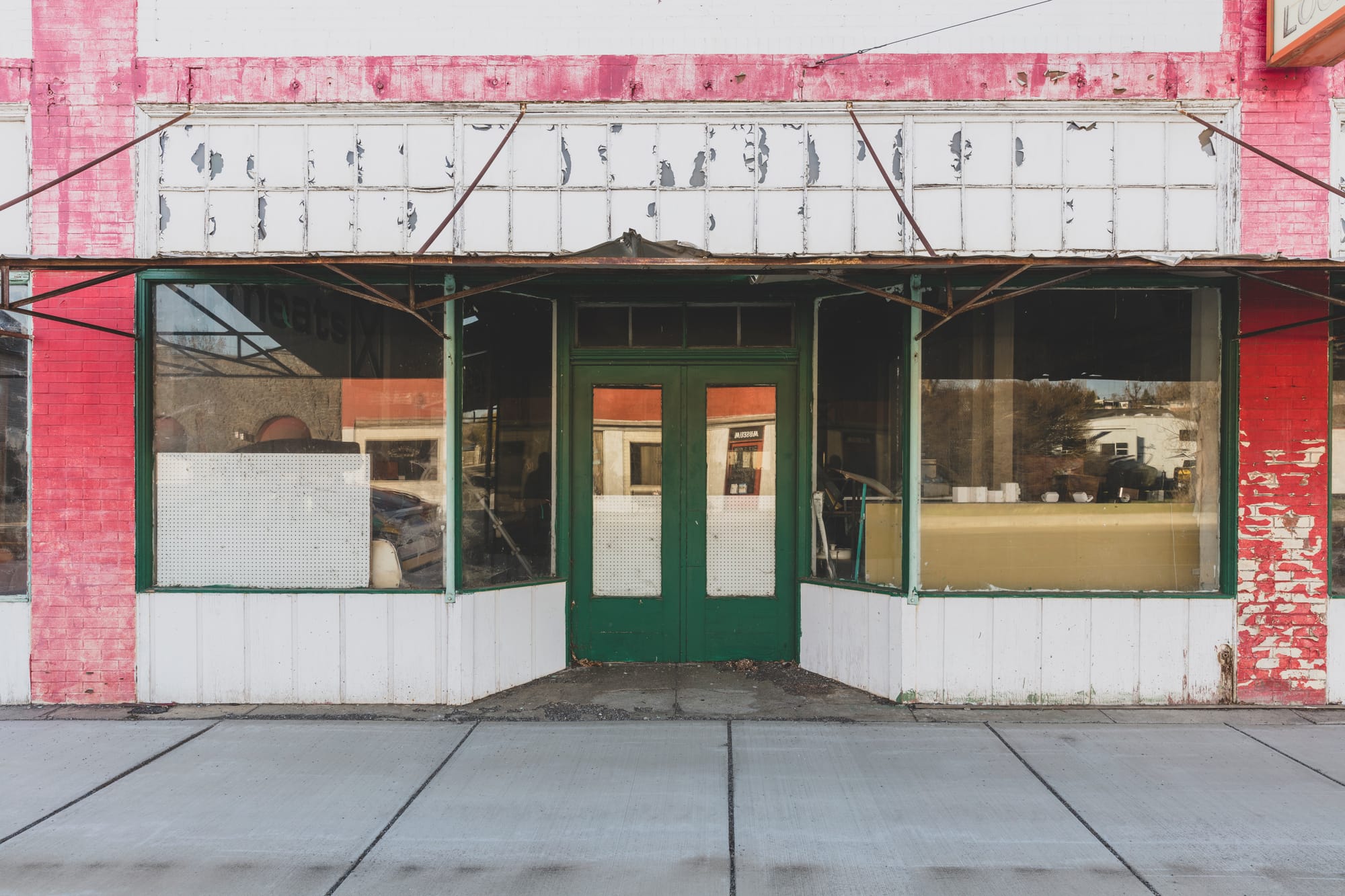
The public sector offers state and tax frameworks that rarely support or protect work with coffee. It allows migrants without legal status to take up that work while offering them, instead of work visas, only tacit permission to cross borders through the Amazon. It obstructs coffee exports as states entangle themselves in futile armed conflicts. Or it simply fails to provide universal healthcare, leaving baristas and roasters with a choice that is no choice at all: go without an ambulance, or risk bankruptcy and homelessness, because even years behind the bar or beside the roasting machine may not cover the bill.
Late capitalism is cracking under its own weight.
Hope in Cooperativism
Coffee people may find hope in their youngest generation.
In the fall of 2026, French high school students launched a wave of protests that quickly spread across the country. They demanded better learning conditions, the hiring of more teachers, and greater investment in public education. On October 6, approximately 266,000 people participated in demonstrations, according to the French Ministry of the Interior. University students, teachers, and parents joined them, while opposition to police violence became another major demand.[33]
Young people, who have limited influence over the political decisions affecting their lives, decided to fight for their future in the streets. Similar Gen Z uprisings can be seen in Italy, Belgium, and Greece, where protesters are demanding, among other things, greater investment in education and improved living conditions. In Spain and Portugal, the housing crisis has become one of the main drivers of mobilization.[34] In Germany, the Gen Z regelt movement organized demonstrations in 34 cities on October 31, protesting against the rising cost of living, the underfunding of public services, and plans for compulsory military service.[35]
Young people are also taking to the streets beyond Europe. In India, the Cockroach movement is protesting changes to electoral rolls that could disenfranchise millions of citizens.[36] In Indonesia, students are opposing the rising cost of living and the authorities’ response to catastrophic forest fires.[37]
In Argentina, they are protesting cuts to public university funding by Javier Milei’s government.[38] Mexico’s Generación Z movement is mobilizing against violence, corruption, and insecurity.[39] Earlier mobilizations of the younger generation in Morocco, Nepal, Madagascar, Peru, Bangladesh, and Kenya likewise grew out of opposition to corruption, inequality, and the failure of public institutions.[40] These are different movements arising from different societies and political traditions. They are united by the conviction that the future cannot remain solely in the hands of those who determine its course today.
A shift in public sentiment is also visible at the ballot box. In the US congressional elections on November 3, 2026, Democrats regained control of both the House of Representatives and the Senate. The shift was particularly pronounced among young voters: according to analyses by Tufts University, 66% of voters aged 18–29 supported Democratic candidates for the House of Representatives, while 30% voted for Republicans.[41] Michigan elected Abdul El-Sayed to the Senate, a progressive Democrat whom Donald Trump repeatedly called a communist, although El-Sayed rejected the label.[42] In his victory speech, he addressed Vice President J.D. Vance with the words “JD, habibi,” reminding him that he would have to swear him in as a senator in January.[43] Trump had previously directed similar accusations of communism at Zohran Mamdani, a democratic socialist who has served as mayor of New York City since January 2026.[44] The election results show growing support for Democrats among young Americans. The question remains whether it will translate into lasting change in how society is organized.
Meanwhile, European elections point in a different direction. The radical right is strengthening its position in France, Germany, and Italy, while its demands concerning migration, national sovereignty, and social order are exerting an increasingly powerful influence on political debate. According to a September 2026 analysis by Le Monde, far-right parties have become an enduring political force in most European countries, although they are also suffering setbacks in some of them.[45] Russia further exploits these tensions by conducting hybrid warfare that includes disinformation, interference in electoral processes, and the deliberate inflaming of existing social conflicts. The European External Action Service has documented such operations in Germany, Poland, and Romania, among other countries.[46] Social anxiety thus becomes both fuel for political competition and a tool of geopolitical influence.
Young coffee people—stand up for better working conditions in coffee. Join forces with workers in other food industries. You—the people whose work feeds humanity—satisfy not only hunger and thirst, the need for caffeine, or the desire to savor a complex sensory profile. You can also satisfy humanity’s hunger for humanness.
As you read coffee publications and websites, scroll through Instagram or TikTok, and write to friends, draw inspiration from others who are not afraid to speak up, even if they may face repression for doing so.
 Krzysztof Blinkiewicz

Encouragingly, coffee people are also taking to the streets. On October 14, 2026, unionized Starbucks workers protested in Austin over protracted negotiations with the company, demanding decent wages and better working conditions.[49] On November 12, baristas, students, and union activists organized demonstrations across more than 40 US campuses, calling for a boycott of Starbucks until the first collective bargaining agreement is reached. Starbucks Workers United represents more than 12,000 workers across the chain, whose demands include a minimum wage of $17 per hour and adequate staffing.[47] Workers at Blue Bottle Coffee, one of the most recognizable specialty coffee brands, have also protested.[48]
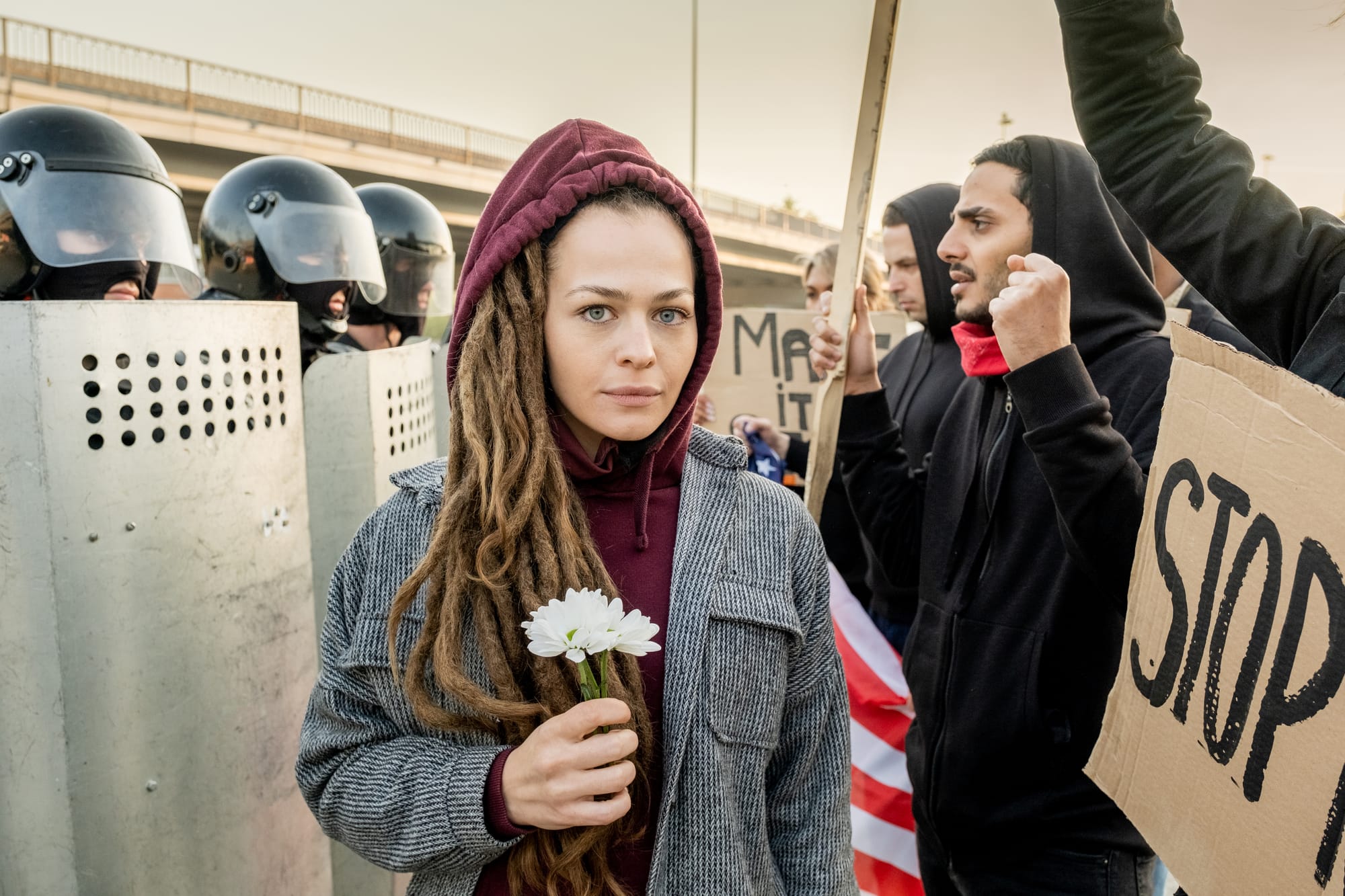
Protests by coffee people extend to producing countries as well. In April 2024, more than three thousand Colombian coffee growers took to the streets across the country, demanding that the government respond to low purchase prices, high production costs, and farm debt.[50] In July 2025, producers associated with 76 coffee-processing facilities protested in Kirinyaga County, Kenya. They opposed proposed regulatory changes that, in their view, could weaken cooperatives and worsen the position of smallholder farmers.[51] These protests show that coffee people are organizing to defend their interests at different stages of the coffee circle. The question remains, however, whether they can act together across the boundaries separating companies, professions, and states.
The right to refuse may define humanness. Many animals follow the herd blindly. Human beings can refuse and choose their own path—but only sometimes. Is “sometimes” enough? What would be universal is the capacity to discern, every time, and make one’s own reasoned choice.
New social orders have often grown from precisely such refusals. Cooperativism is one of the best-known proposals.
It takes different forms. Some—agricultural cooperatives built around dispersed ownership—are well known in coffee-growing regions. Your coffee from Ethiopia, Rwanda, Kenya, or Yemen was probably produced with the help of one such cooperative.
For Immanuel Wallerstein, capitalism is the “endless accumulation of capital,” to which production, competition, and social relations are subordinated. He emphasized that capitalists need states: states establish market rules, protect economic interests, and enable them to gain advantages over competitors. At the same time, the multiplicity of states allows capital to exploit differences among their policies, creating a global network of economic and geopolitical dependencies. Liberalism gave this system its ideological justification; democratization introduced the tension between political equality and economic inequality.[52]
At the roots of cooperativism lies a refusal of capitalist logic, which rewards work for private gain rather than the common good. At times, it also involves a conscious departure from the imperative of unlimited growth in favor of sufficiency, dignity, and meeting needs within planetary boundaries. This position is known as degrowth.[4]
Edward Abramowski (1868–1918) was a Polish philosopher, sociologist, psychologist, and social activist, and one of the foremost theorists of cooperativism. In a short, nine-point text titled The Principle of the Cooperative Republic, barely a page and a half long, he described people’s associations—organizations that were “non-territorial, non-compulsory, voluntarily united through the common interests of people with equal rights, who govern and co-own the common good.”[53]
They were intended to emerge—and did emerge—as a form of human economic self-defense: against the market, but also against the state or war. According to Abramowski: “The republic knows no law imposed against anyone’s convictions. Law exists here only for those who recognize it voluntarily. […] There is nothing absolute or sacred about it; it is the servant of the human being. Life rules over it; it does not rule over life.”[53]
The possibility of creating such cooperatives voluntarily reveals something human beings share: the capacity to consciously shape the course of their own lives and seek conditions for a dignified life through cooperation with others.
Here the earlier question returns: what is universal and natural to human beings—holding things in common or private ownership? We should ask honestly whether private property itself is the problem, or the absence of an upper limit. We know how to name the lower limit: “extreme poverty,” “poverty,” “unpayable debt,” or simply “having nothing.” But what do we call the summit of possession? Even one person’s economic dominion over the entire planet would not exhaust the definition of that barrier. “An upper limit on private wealth serves to protect shared conditions of life from the concentration of wealth and power.”[4]
The Better Coffee is not opposed to private property. It does only this—or no less than this: it assesses forms of ownership by their effects on access to the means of life, agency, and the concentration of power. It supports shared use and control of strategic resources and protection of the commons, linking resource use—including land and means of production—to responsibility for its social and environmental effects.
Cooperativism is not a new response to economic conditions that produce scarcity, exploitation, loneliness, lack of state protection, excessive and fruitless work, and the inability to meet needs and desires or attain well-being.
The history of cooperativism reaches much further back than the birth of the modern cooperative movement. As early as 400,000–200,000 years ago, our ancestors hunted together, transported prey, and probably shared food—practices whose traces have been discovered at sites including Qesem Cave.[54] Similar forms of cooperation and resource sharing can be observed today among hunter-gatherer communities such as the Agta in the Philippines and the BaYaka in Central Africa. Food exchange between families helps them cope with uncertainty and creates enduring social relationships.[55] These communities have their own contemporary histories, while their forms of organization demonstrate the diversity of ways in which people can live together. In the nineteenth century, ideas of cooperation assumed a modern institutional form. The workers’ cooperative founded in Rochdale, England, in 1844 became one of the foundations of the international cooperative movement, which developed principles of democratic governance and the shared management of resources.[56]
In the sixth of his Theses on Feuerbach, Karl Marx wrote that the human essence “in its reality [...] is the ensemble of the social relations.”[57] Humanness is therefore shaped through relations between people, under particular historical and social conditions. Cooperation is one way of consciously shaping those relations.
The Better Coffee is a method of work for coffee people, created by coffee people themselves—not by states or corporations. One of its theoretical foundations is cooperativism—a principle for organizing action and relationships within a system through cooperation, equality, mutual aid, shared decision-making, and shared responsibility for the commons.
This principle has taken institutional form within The Better Coffee Endeavour: The Cooperative, an actual cooperative created for coffee people.
It is intended to provide economic self-defense, shared education, and a means of exchanging experience, coffee, machines, and services. It has its own commons and community fund. It is a membership organization with a cooperative coordinator, a Peer Council for resolving disputes, and mechanisms that facilitate access to membership and training. It supports not only its members but coffee people more broadly, directing mutual aid toward them as embodiments of humanness. It is also a platform for refusal—an ongoing protest, even a strike, by coffee people.
It may not be essential, but it is ours.
So, who is the human being who encounters coffee?
Perhaps we should listen to Barbara Skarga once more.
“And yet, is it not the human being who knows how to cross boundaries, who rebels against anonymous forces, against the verdicts of history, against the social will? Is it not the human being who creates the new, unable to remain within the same? The human Self does not lose its sovereignty so easily. It is the bearer of the will to change; it reaches where communities confined to the grooves of social existence they have carved for themselves cannot reach. Only the human being changes the way we think—as Kant, Husserl, and Heidegger did.”[1]
Keep Red Ink Coffee in circulation
If this essay gave you something worth carrying forward, support our work by selecting Donate below.
The button opens our secure donation panel powered by Stripe.
[1] Barbara Skarga, Wykład o człowieku, in Człowiek to nie jest piękne zwierzę (Kraków: Znak, 2007).
[2] Chris Smith, dir., Don’t Die: The Man Who Wants to Live Forever (Netflix, 2025), https://www.netflix.com/title/81757532.
[3] Yuval Noah Harari, Homo Deus: A Brief History of Tomorrow (London: Harvill Secker, 2016).
[4] The Better Coffee Standard, Third Edition (2026), https://files.thebettercoffee.org/download/The_Better_Coffee_Standard.pdf.
[5] Pope Leo XIV, Magnifica Humanitas, encyclical letter, May 15, 2026, § 56, https://www.vatican.va/content/leo-xiv/en/encyclicals/documents/20260515-magnifica-humanitas.html.
[6] Elon Musk, post on Twitter (now X), October 31, 2021, https://twitter.com/elonmusk/status/1454808104256737289.
[7] Julie E. Cohen, Oligarchy, State, and Cryptopia, Fordham Law Review 94 (2025): 563–625, https://fordhamlawreview.org/wp-content/uploads/2025/10/Vol-94_Issue-2_10_Cohen-Online-Ready.pdf.
[8] Carl Barks, Only a Poor Old Man, Four Color, no. 386 (Dell Publishing, March 1952), https://www.comics.org/issue/9530/.
[9] Adam McKay, dir., Don’t Look Up (Netflix, 2021), https://www.netflix.com/title/81252357.
[10] Slavoj Žižek, Too Late to Awaken: What Lies Ahead When There Is No Future? (London: Allen Lane, 2023).
[11] Francis Fukuyama, The End of History and the Last Man (New York: Free Press, 1992), https://books.google.com/books?id=6KZmAAAAMAAJ.
[12] Adrian Johnston, Capitalism’s Implants: A Hegelian Theory of Failed Revolutions, Crisis & Critique 8, no. 2 (2021): 140.
[13] Adrian Johnston, Jacques Lacan, The Stanford Encyclopedia of Philosophy, Stanford University, https://plato.stanford.edu/entries/lacan/.
[14] Michel Foucault, The Subject and Power, in Michel Foucault: Beyond Structuralism and Hermeneutics, ed. Hubert L. Dreyfus and Paul Rabinow (Chicago: University of Chicago Press, 1983).
[15] Peter Weir, dir., The Truman Show (Paramount Pictures, 1998), https://www.paramount.com/movies/the-truman-show.
[16] Jim Waterson and Dan Milmo, Facebook Whistleblower Frances Haugen Calls for Urgent External Regulation, The Guardian, October 25, 2021, https://www.theguardian.com/technology/2021/oct/25/facebook-whistleblower-frances-haugen-calls-for-urgent-external-regulation.
[17] Matt Damon, quoted in Water.org, Water is the Way, press kit, August 2024.
[18] Raphaëlle Besse Desmoulières et al., Protests Against Data Centers Held Across Europe, Le Monde, November 9, 2026, https://www.lemonde.fr/en/economy/article/2026/11/09/protests-against-data-centers-held-across-europe_6775706_19.html.
[19] Barbara Skarga, Człowiek to nie jest piękne zwierzę, rozm. Jarosław Kurski, Gazeta Wyborcza, 17–18 kwietnia 2004, s. 15.
[20] Hannah Arendt, The Human Condition (Chicago: University of Chicago Press, 1958).
[21] Bhagavad Gita 3.5, trans. Swami Gambhirananda, Bhagavad Gita: With the Commentary of Śaṅkarācārya (Kolkata: Advaita Ashrama, 1984), https://heritage.iitk.ac.in/SBG/3.5.
[22] Paul Nurse, What Is Life? Understand Biology in Five Steps (Oxford: David Fickling Books, 2020), https://www.davidficklingbooks.com/shop/ItemDetails.php?pubID=281.
[23] David Christian, Future Stories: What’s Next? (New York: Little, Brown and Company, 2022), https://researchers.mq.edu.au/en/publications/future-stories-whats-next/.
[24] Stephen Barker, Lorraine E. Lisiecki, Gregor Knorr, Sophie Nuber, and Polychronis C. Tzedakis, Distinct Roles for Precession, Obliquity, and Eccentricity in Pleistocene 100-kyr Glacial Cycles, Science 387, no. 6737 (2025): eadp3491, https://doi.org/10.1126/science.adp3491.
[25] Christine Kaufhold, Matteo Willeit, Guy Munhoven, Volker Klemann, and Andrey Ganopolski, Timing of a Future Glaciation in View of Anthropogenic Climate Change, Communications Earth & Environment 6 (2025): 1016, https://doi.org/10.1038/s43247-025-02867-0.
[26] Andrey Ganopolski, Ricarda Winkelmann, and Hans Joachim Schellnhuber, Critical Insolation–CO₂ Relation for Diagnosing Past and Future Glacial Inception, Nature 529 (2016): 200–203, https://doi.org/10.1038/nature16494.
[27] Ran Barkai, Ella Assaf, Bar Efrati, Tal Simon, Liad Mudrik, and Yoav Ram, Homo Memorabiliaxis: Souvenirs and the Evolution of Autobiographical Memory and Self, Evolutionary Anthropology 35 (2026): e70051, 8, https://doi.org/10.1002/evan.70051.
[28] Justyna Kajta, Janina Myrczik, and Mateusz Karolak, In the Name of ‘Endangered Nations’ and ‘Unsovereign States’? Official Discourses of Radical Right Movement Parties and Social Movement Organizations in Poland and Germany, Nationalities Papers 52, no. 3 (2024): 619–639, https://doi.org/10.1017/nps.2022.113.
[29] Angelos Chryssogelos and Monika Brusenbauch-Meislová, The Populist Logic Behind Trump’s Tariffs, LSE British Politics and Policy, April 2, 2025, https://blogs.lse.ac.uk/politicsandpolicy/the-populist-logic-behind-trumps-tariffs/.
[30] Assma Maad and Maxime Vaudano, How Le Pen’s Party Has Shifted Its Economic Platform Over 15 Years, Le Monde, May 19, 2026, https://www.lemonde.fr/en/les-decodeurs/article/2026/05/19/how-le-pen-s-party-has-shifted-its-economic-platform-over-15-years_6753585_8.html.
[31] Margaret M. Pearson, Meg Rithmire, and Kellee Tsai, The State and Capitalism in China (Cambridge: Cambridge University Press, 2023), https://www.cambridge.org/core/elements/state-and-capitalism-in-china/621573281A601FF77F085386336A991D.
[32] Slavoj Žižek, China, ‘Asian Capitalism’ and Our Lack of Ideology, recorded talk, 2011, https://www.zizek.org/talk/slavoj-zizek-china-asian-capitalism-and-our-lack-of-ideology.
[33] Agathe Beaudouin et al., French High School Protests Grow and Draw Widespread Support, Le Monde, October 7, 2026, https://www.lemonde.fr/en/france/article/2026/10/07/high-school-students-movement-protests-grow-and-draw-widespread-support_6758337_7.html.
[34] Donatella della Porta, Political Scientist: ‘Footage of France’s Youth Protests Is So Powerful That It Has an Impact Across Europe’, Le Monde, November 1, 2026, https://www.lemonde.fr/en/international/article/2026/11/01/donatella-della-porta-political-scientist-footage-of-france-s-youth-protests-is-so-powerful-that-it-has-an-impact-across-europe_6768544_4.html.
[35] Jugendproteste: ‘Gen Z regelt’ will Demos fortsetzen, Tagesschau, November 1, 2026, https://www.tagesschau.de/inland/gesellschaft/gen-z-demos-bilanz-100.html.
[36] Hannah Ellis-Petersen, India’s Cockroach Movement Launches New Protests Over Changes to Voter Roll, The Guardian, October 2, 2026, https://www.theguardian.com/world/2026/oct/02/india-cockroach-movement-protests-mumbai-changes-voter-roll.
[37] Stanley Widianto, Indonesian Students Protest Over Forest Fires, Prabowo Policies, Reuters, October 28, 2026, https://www.reuters.com/world/asia-pacific/indonesian-students-protest-over-forest-fires-prabowo-policies-2026-10-28/.
[38] Teresa Bo, Argentine Students Protest on Campus Over Milei’s Austerity, Al Jazeera, October 16, 2026, https://www.aljazeera.com/news/2026/10/16/argentine-students-protest-on-campus-over-mileis-austerity.
[39] Sergio Iván González, Anuncian nueva marcha de la Generación Z; estas vialidades podrían verse afectadas, UnoTV, October 21, 2026, https://www.unotv.com/estados/ciudad-de-mexico/anuncian-nueva-marcha-de-la-generacion-z-estas-vialidades-podrian-verse-afectadas/.
[40] Council on Foreign Relations, How Global Gen Z Protests Have Shocked and Transformed Governments, 2025, https://www.cfr.org/articles/how-global-gen-z-protests-have-shocked-and-transformed-governments.
[41] CIRCLE, Tufts University, The Youth Shifts That Defined the 2026 Midterm Elections, November 6, 2026, https://circle.tufts.edu/index.php/latest-research/youth-shifts-defined-2026-midterm-elections.
[42] Caleb McCullough, Do MI Senate Candidate El-Sayed’s Comments About ‘Public Ownership’ Show He Supports Communism?, PolitiFact, August 19, 2026, https://politifact.com/article/2026/aug/19/do-mi-senate-candidate-el-sayeds-comments-about-public-ownership-show-he-supports-communism/.
[43] Victoria Bisset, ‘JD, Habibi ... Swear Me In’: What El-Sayed’s Quip to Vance Means, The Washington Post, November 5, 2026, https://www.washingtonpost.com/politics/2026/11/05/incoming-senator-abdul-el-sayed-called-vance-habibi-what-does-that-mean/.
[44] CNN, interview with Zohran Mamdani, Erin Burnett OutFront, September 29, 2025, https://prod.transcripts.cnn.com/show/cg/date/2025-09-29/segment/01.
[45] Pierre Breteau, Assma Maad, and Maxime Vaudano, L’extrême droite progresse-t-elle vraiment partout en Europe?, Le Monde, September 22, 2026, https://www.lemonde.fr/les-decodeurs/article/2026/09/22/l-extreme-droite-progresse-t-elle-vraiment-partout-en-europe_6779789_4355770.html.
[46] European External Action Service (EEAS), 4th EEAS Report on Foreign Information Manipulation and Interference Threats, March 2026, https://euvsdisinfo.eu/eeas-4th-fimi-threat-report-march-2026/.
[47] Michael Sainato, College Students Rally in Support of Starbucks Baristas Urging Boycott Over Contract Impasse, The Guardian, November 12, 2026, https://www.theguardian.com/us-news/2026/nov/12/starbucks-workers-campus-rally-contract-talks.
[48] San Francisco Living Wage Coalition, Blue Bottle Coffee Rally, 2025, https://www.livingwage-sf.org/blue-bottle-coffee-rally/.
[49] Texas AFL-CIO, Austin Union Baristas Demand Starbucks Finalize Fair Union Contract During UT Rally, October 15, 2026, https://texasaflcio.org/news/austin-union-baristas-demand-starbucks-finalize-fair-union-contract-during-ut.
[50] Más Colombia, Café en crisis: Productores movilizados exigen soluciones y debate sobre el Fondo de Estabilización, April 18, 2024, https://mascolombia.com/cafe-en-crisis/.
[51] Johnson Muriithi, Kirinyaga Coffee Farmers Protest After Court Extends Orders on Proposed Direct Pay, Citizen Digital, July 3, 2025, https://citizen.digital/article/kirinyaga-coffee-farmers-protest-after-court-extends-orders-on-proposed-direct-pay-n365690.
[52] Immanuel Wallerstein, Contemporary Capitalist Dilemmas, the Social Sciences, and the Geopolitics of the Twenty-First Century, Canadian Journal of Sociology 23, no. 2/3 (1998): 141–158; Immanuel Wallerstein, Historical Capitalism (London: Verso, 1983), 18, https://files.libcom.org/files/immanuel-wallerstein-historical-capitalism.pdf; Immanuel Wallerstein, The Agonies of Liberalism: What Hope Progress?, New Left Review, no. 204 (1994), https://newleftreview.org/issues/i204/articles/immanuel-wallerstein-the-agonies-of-liberalism-what-hope-progress.
[53] Edward Abramowski, Braterstwo, solidarność, współdziałanie. Pisma spółdzielcze i stowarzyszeniowe (Łódź–Sopot–Warszawa: Stowarzyszenie „Obywatele Obywatelom”, 2009).
[54] Mary C. Stiner, Ran Barkai, and Avi Gopher, Cooperative Hunting and Meat Sharing 400–200 kya at Qesem Cave, Israel, Proceedings of the National Academy of Sciences 106, no. 32 (2009): 13207–13212, https://doi.org/10.1073/pnas.0900564106.
[55] Mark Dyble et al., Networks of Food Sharing Reveal the Functional Significance of Multilevel Sociality in Two Hunter-Gatherer Groups, Current Biology 26, no. 15 (2016): 2017–2021, https://doi.org/10.1016/j.cub.2016.05.064.
[56] International Cooperative Alliance, The History of the Co-operative Movement, https://www.ica.coop/en/history-co-operative-movement.
[57] Karl Marx, Theses on Feuerbach, thesis VI (written 1845; first published in 1888), trans. W. Lough, in Marx/Engels Selected Works, vol. 1 (Moscow: Progress Publishers, 1969), https://www.marxists.org/archive/marx/works/1845/theses/theses.htm.