Coffee People: Julian Loayza
Julian Loayza, coffee trainer, London, UK. Four questions — everything the industry rarely stops to hear.

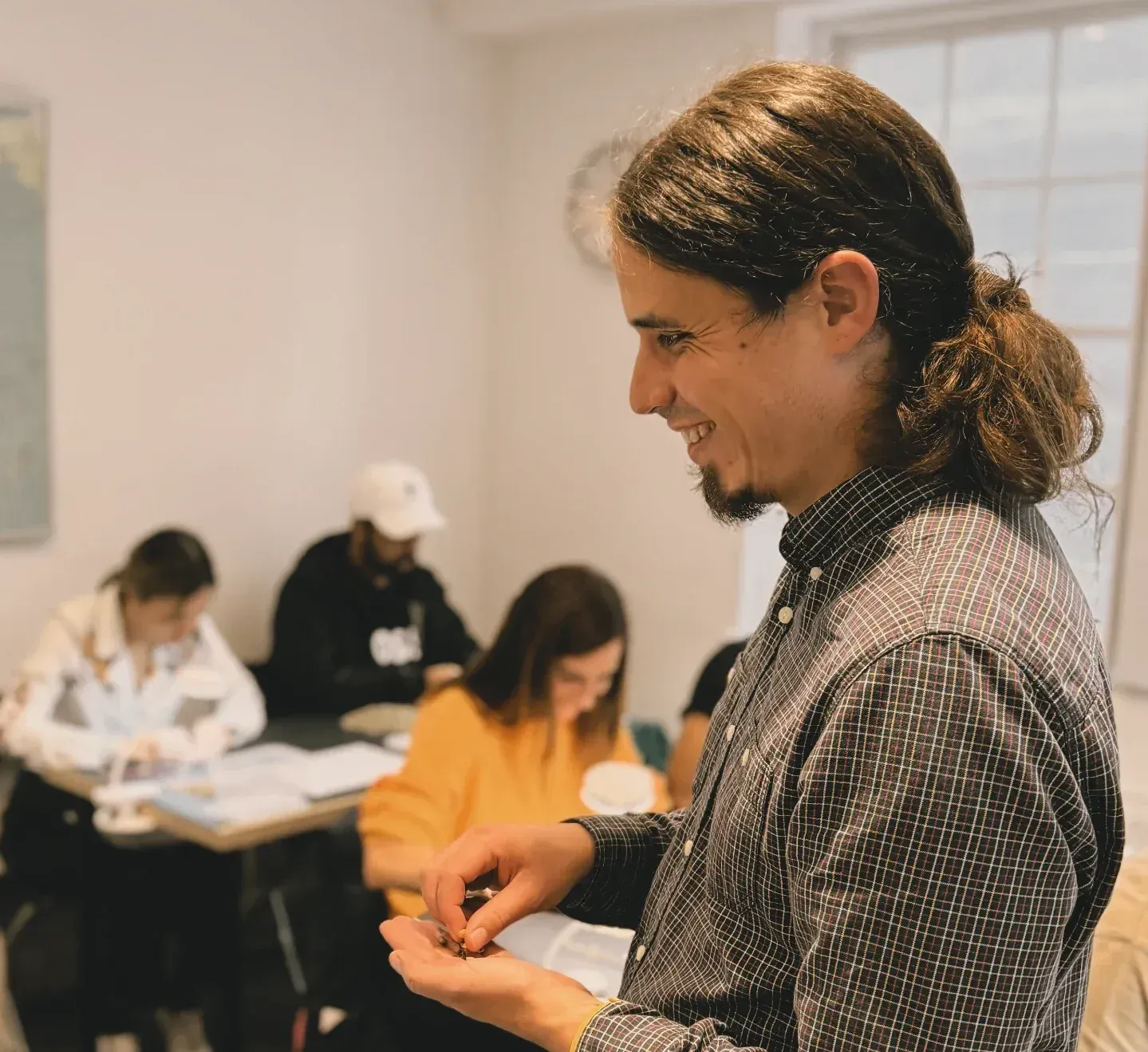
Coffee people.
The Better Coffee Standard defines it precisely: everyone whose life and work are bound to coffee, at every stage of the coffee circle — including those working under coercion, economic dependency, or without pay. Their families. Those who keep them standing.
Read more in the free The Better Coffee Standard.
The industry never stops talking about coffee. It rarely stops to talk about the people behind it. Red Ink Coffee exists, in part, to change that.
Coffee People is a series of portraits. Four questions — their voices.
Who are you and what do you do in coffee?
I work as a coffee trainer, teaching everything from roasting, to brewing and tasting. I was born and raised in Bolivia but life took me to different places: Spain, Germany, Poland, UAE and now the UK. I'm currently based in London. I'm married and have 2 kids with heavy British accents.
Tell us about a moment in your work with coffee that you're genuinely proud of.
The best part of training people is that moment when students get it. It's so great when you see them aligning with you as a teacher and enjoying the lesson. Even if they don't agree with what you are saying. Healthy discussions are so important. There is nothing better than being happy, open and awake while learning.
What's one problem you see in your part of the coffee world — and why does it matter to you personally?
I see that baristas, at least in the UK, are not making enough money. Experienced baristas tend to look for other jobs within the supply chain that can offer them better pay. Barista work is considered a starting point instead of a career. The barista trade is losing so much experience and knowledge because of this.
What would you change if you could — and what would better look like for you?
We all agree that coffee people need to earn more — pickers, farmers, processors, etc. I would also include in this group baristas, front of house, QC, managers, etc. The coffee industry earns billions from selling drinks that consumers perceive as expensive, but so much of that money is spent in expensive rents and rates — in big cities like London — and is not ending up in the pockets of the professionals doing the hard work.
You are coffee people. Tell us.
Four questions. Any language. Any format.
- Who are you and what do you do in coffee?
- A moment you're genuinely proud of.
- One problem in your part of the coffee world — and why it matters to you.
- What would you change — and what would better look like?
Include a short bio and a photo from your work environment. Send your answers to redinkcoffee@thebettercoffee.org
Support this work
If this text was useful to you, you can support Red Ink Coffee.
Contributions help cover basic infrastructure costs and keep this space independent.
Voluntary. No perks. No obligations.