Coffee rust means less yield, less flavor — and harder choices for farmers. In Nariño, Miguel Olmos shows how producers face the devastator — and the impossible choice between security and heritage.
The air in the mountains of Nariño is thin and sweet. Standing on a steep hillside nearly 2,000 meters above sea level, you feel suspended between the deep green of the coffee trees and the vast Andean sky. The unique microclimate here, shaped by equatorial sunlight and cool mountain nights, allows coffee cherries to mature slowly, developing the complex and floral character that has made Nariño’s coffees so sought after.
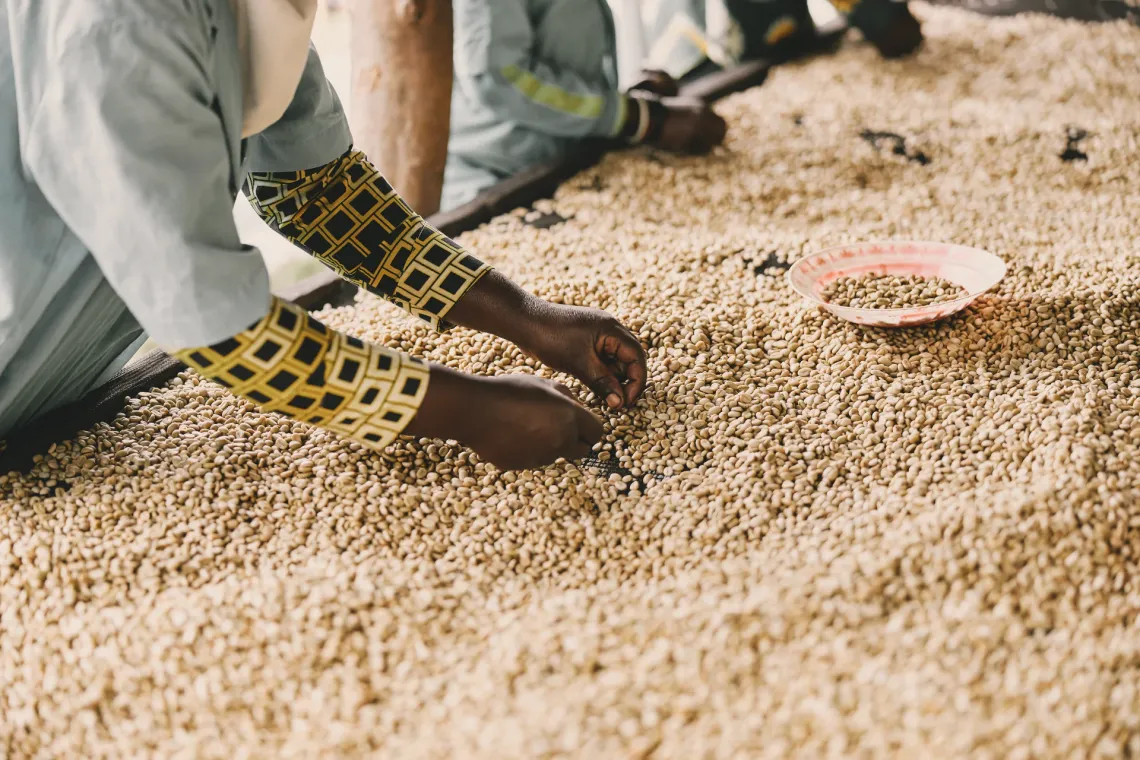
I was visiting the farm of a producer named Elena, whose coffees I had admired for years. The purpose of these trips is always twofold: to taste and select the best lots, but more importantly, to listen. To understand the reality behind the beautiful product that ends up in our cups.
As we walked between rows of old Caturra trees, their branches heavy with maturing cherries, Elena stopped and gently turned over a leaf on a lower branch.
“Mire, Miguel,” she said quietly. “La roya.”
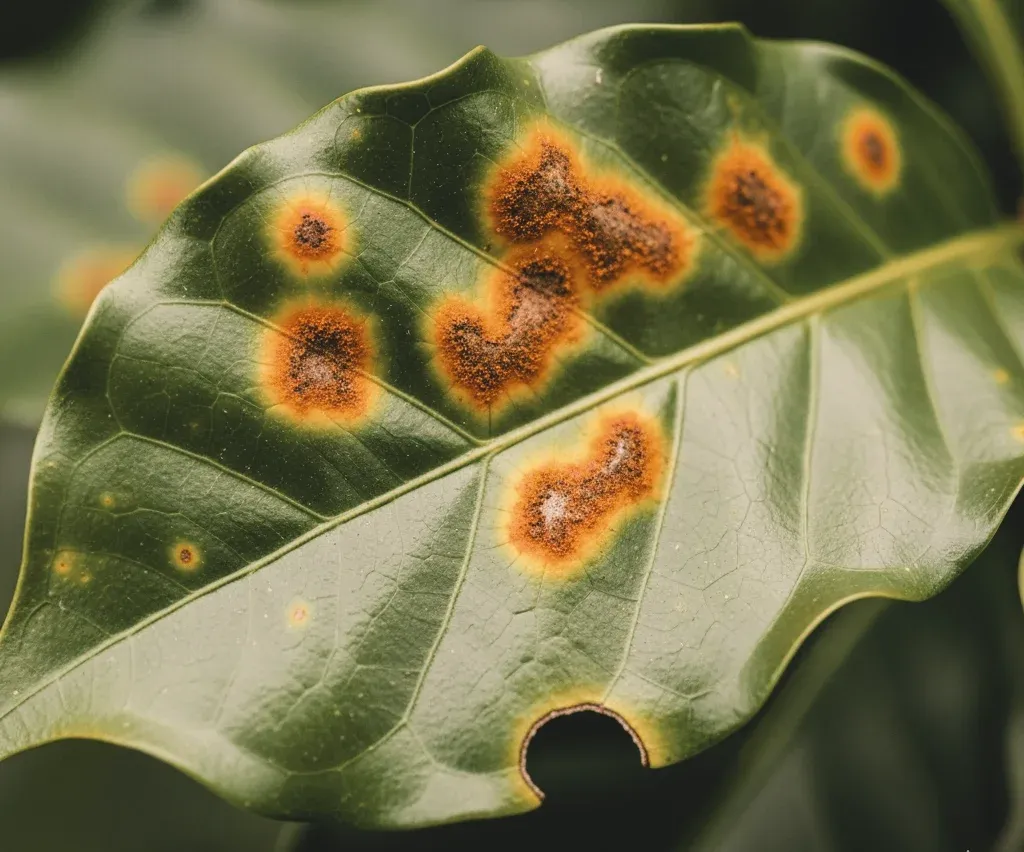
I leaned in. On the underside of the leaf were several small, powdery spots, the color of rust. To the untrained eye, they looked insignificant. To a coffee farmer, they were a warning.
“It always starts here,” she explained, rubbing the orange dust between her thumb and forefinger. “In the shadows, where the leaves stay wet after the rain. From here, if you are not careful, the wind carries it like fire. It takes the leaves, and a tree without leaves cannot feed its fruit. It cannot live.”
This conversation is happening on coffee farms all over the world — quietly, repeatedly — shaping decisions that rarely reach the surface of the market.
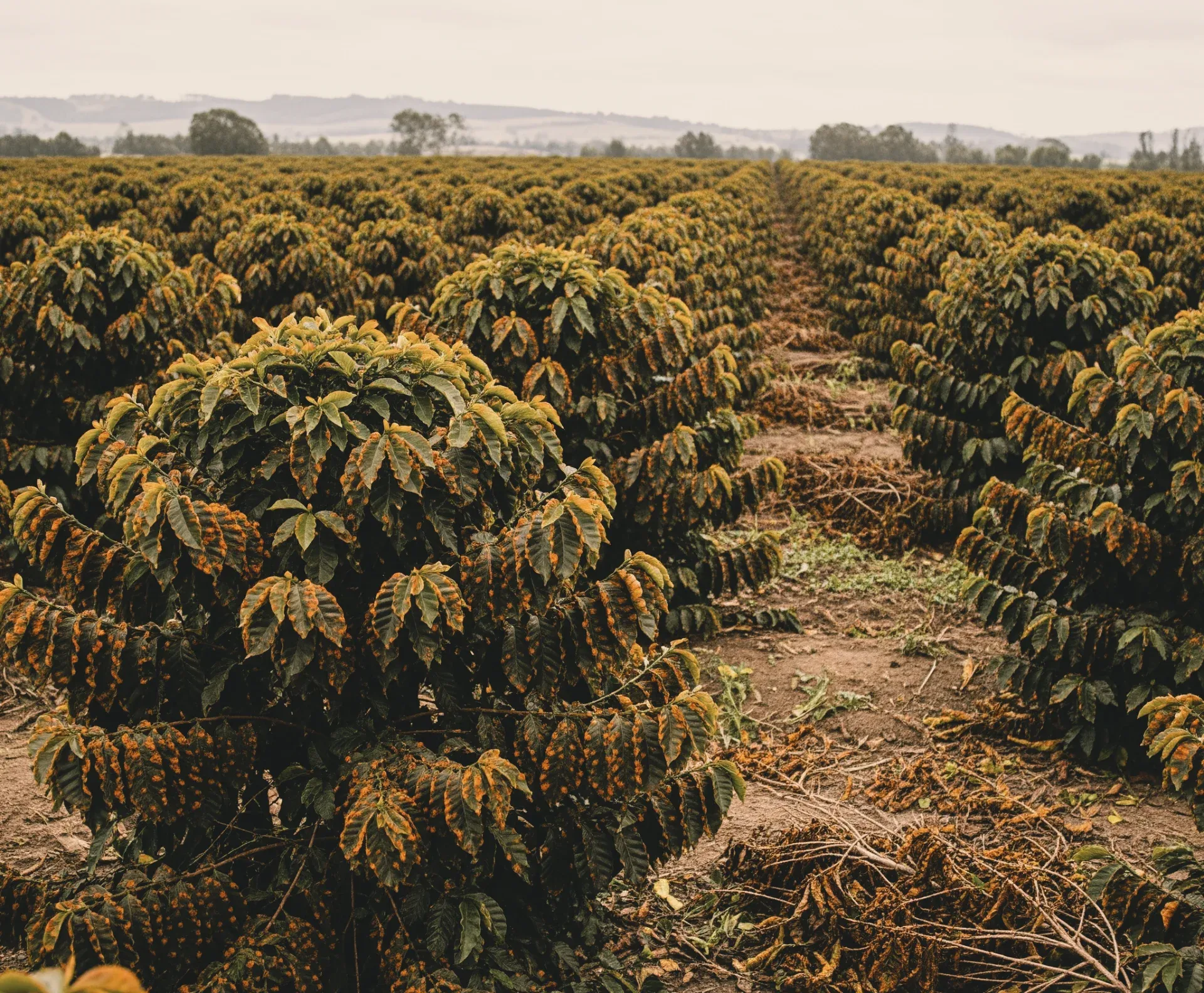
The Devastator: What Is La Roya?
What Elena calls la roya is known to scientists as Hemileia vastatrix. The name tells its own story: Hemileia refers to the half-smooth nature of its spores, and vastatrix is Latin for “devastator.”
Since its identification in the 1860s, the fungus has repeatedly reshaped the coffee world. In the late nineteenth century, it wiped out coffee production in Sri Lanka, forcing a colonial pivot to tea — a single biological event with lasting cultural and economic consequences.
The fungus lands on a leaf and, under the right conditions of warmth and moisture, penetrates its surface. Once inside, it disrupts photosynthesis and drains the plant’s energy. The orange spots are not just symptoms; they are launch points — millions of spores waiting to be carried by wind to the next tree, the next farm.
Climate change is shifting the balance further in the fungus’s favor. Warmer temperatures allow it to survive at higher altitudes, threatening regions that were once considered natural refuges.
The Farmer’s Impossible Choice
Elena pointed toward an adjacent hillside where the trees were shorter, more uniform.
“That is Castillo,” she said. “It is resistant. It gives security. The production is stable. I sleep better.”
Then she looked back at the Caturra around us.
“But the flavor,” she added. “The Caturra has a spark. A sweetness. It is what my father planted. And his father before him. To replace it feels like losing part of our history.”
This is the choice farmers face — not in theory, but in practice.
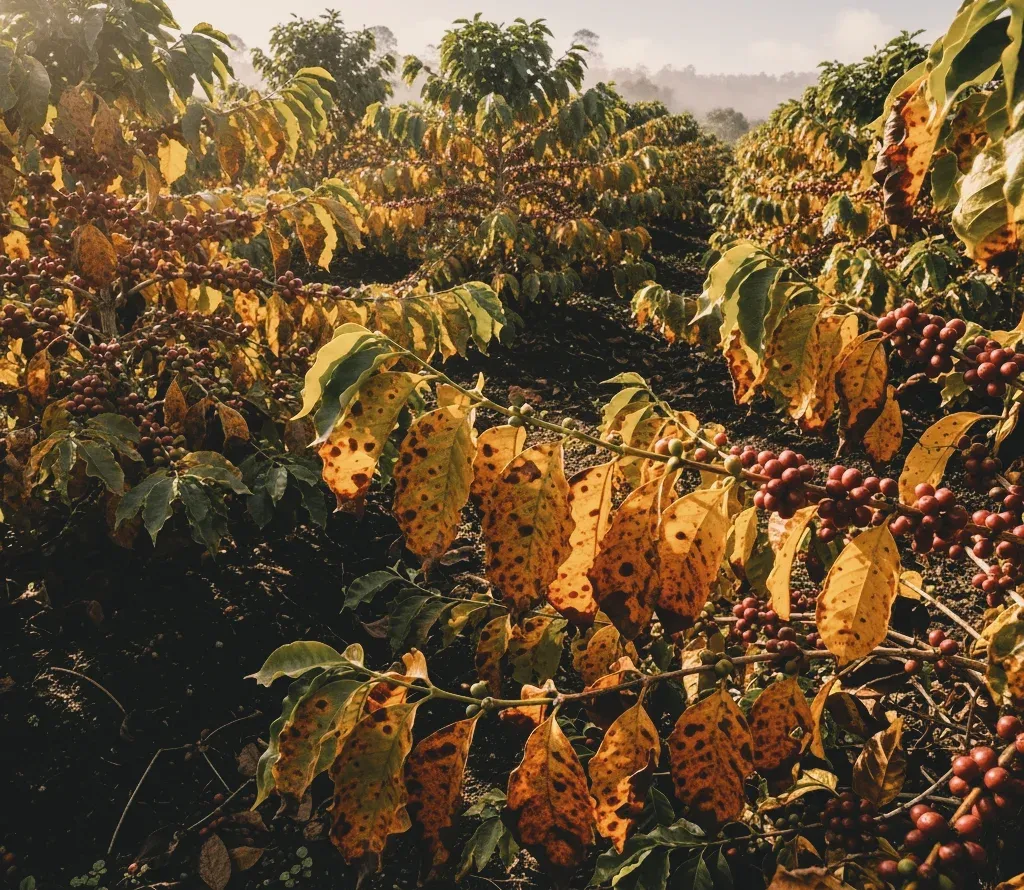
Many heirloom Arabica varieties prized for their flavor are highly susceptible to rust. The industry’s response has been hybridization, often crossing Arabica with more resilient genetic lines to protect yields. Research centers have made enormous progress, and newer resistant varieties can offer excellent cup quality.
Still, the decision is heavy.
Renovating a single hectare costs thousands of dollars and requires years without full production. For smallholder farmers, this means risk layered on top of risk. Do they invest in future security and abandon what defines their coffee? Or do they continue fighting the disease with constant monitoring, costly treatments, and no guarantees?
The View from Our Side of the Cup
Standing on that hillside, it became clear how incomplete our language about coffee often is.
Flavor does not exist in isolation. That brightness, that floral clarity in a Nariño Caturra, is not just the result of altitude or soil. It is the result of a farmer choosing vulnerability — choosing to cultivate something fragile in an environment that is becoming less forgiving each year.
The price of coffee is not a reward for excellence. It is part of the infrastructure that allows farmers to absorb loss, experiment carefully, and make decisions that are not purely defensive.
Every cup reflects a series of choices made far from the tasting table — choices shaped by climate, disease, history, and the limits of what a person can afford to risk.
Coffee rust is not just a biological problem. It is a structural one. And every time a farmer keeps their trees alive through another season, it is not because the system works — but because they endure within it.
Support this work
If this text was useful to you, you can support Red Ink Coffee.
Contributions help cover basic infrastructure costs and keep this space independent.
Voluntary. No perks. No obligations.