Coffee People: Emma Markland Webster
Emma Markland Webster, coffee educator, coach, and community builder, Aotearoa New Zealand. Four questions — everything the industry rarely stops to hear.

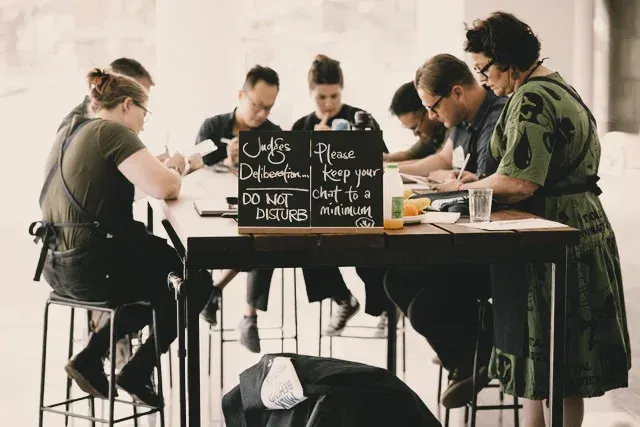
Coffee people.
The Better Coffee Standard defines it precisely: everyone whose life and work are bound to coffee, at every stage of the coffee circle — including those working under coercion, economic dependency, or without pay. Their families. Those who keep them standing.
Read more in the free The Better Coffee Standard.
The industry never stops talking about coffee. It rarely stops to talk about the people behind it. Red Ink Coffee exists, in part, to change that.
Coffee People is a series of portraits. Four questions — their voices.
Who are you and what do you do in coffee?
I'm Emma Markland Webster, a coffee educator, coach, judge, event organiser, consultant, and equipment specialist from Aotearoa New Zealand. Over the past three decades I've worked across almost every corner of the coffee industry, from behind the bar and international competition to education, equipment, events, and community development. Today I run the New Zealand School of Coffee, coach competitors, support coffee businesses through consultancy and training, and work with AMC Roastery Supply NZ helping cafés and roasteries with coffee equipment solutions. I've worn many hats throughout my career, but the common thread has always been people: helping them learn, grow, connect, and succeed through coffee.
Tell us about a moment in your work with coffee that you're genuinely proud of.
The honest answer is that it isn't a single moment.
I've been fortunate to achieve things personally that I am proud of, but when I look back over my career, the moments that matter most have very little to do with me.
For more than twenty years I had the privilege of helping build coffee competitions and events throughout New Zealand. Hundreds of competitors, judges, volunteers, sponsors, and coffee professionals have passed through those spaces. Watching someone volunteer for the first time and later seeing them become a leader, seeing a nervous competitor gain confidence, or helping someone realise they belong in this industry is what I'm proud of.
I'm equally excited by the projects I'm working on now. Whether it's judge training, coaching, education, or new community-driven events, the goal remains the same: create opportunities for people to learn, connect, and succeed.
Too often success is measured by who stands on the podium. I think some of the most important work happens behind the scenes, creating environments where other people can stand there.
What's one problem you see in your part of the coffee world — and why does it matter to you personally?
I think we've become very good at talking about community and not always as good at practising it.
Coffee often celebrates individuals while overlooking the countless people who make those successes possible. Volunteers, organisers, educators, mentors, judges, sponsors, and community builders rarely receive much attention, despite being essential to the health of the industry.
It matters to me because I've spent much of my career in those supporting roles. I've learned that strong communities are built through service, trust, transparency, respect, and a willingness to put the collective good ahead of personal recognition.
When people feel unheard, excluded, or undervalued, communities shrink. When people feel respected and empowered, communities grow.
For me, coffee has never been about power. It's about participation. It's just coffee after all...
What would you change if you could — and what would better look like for you?
I'd like to see more servant leadership and less ego.
Too many organisations, communities, and industries become focused on titles, influence, and control. The best leaders I've encountered have been the exact opposite. They listen. They communicate openly. They create opportunities for others. They understand that leadership is not about being important; it's about making other people feel important.
Better would look like more transparency, more collaboration, and more genuine engagement with the people affected by decisions. It would mean valuing contribution as much as visibility and recognising that healthy communities are built by many people, not a handful of individuals at the top.
If I could change one thing, it would be shifting the focus from power to service.
At its best, coffee creates connection. It gives people a reason to gather, learn, compete, collaborate, and support one another. The coffee itself is only part of the story.
The real story has always been the people.
You are coffee people. Tell us.
Four questions. Any language. Any format.
- Who are you and what do you do in coffee?
- A moment you're genuinely proud of.
- One problem in your part of the coffee world — and why it matters to you.
- What would you change — and what would better look like?
Include a short bio and a photo from your work environment. Send your answers to redinkcoffee@thebettercoffee.org
Support this work
If this text was useful to you, you can support Red Ink Coffee.
Contributions help cover basic infrastructure costs and keep this space independent.
Voluntary. No perks. No obligations.