Before the Roast: What Happens When You Wash Green Coffee
A roaster in Osaka washes his green coffee before it goes into the drum. Not as a stunt — as a question. What he found in the water, and in the cup, might change how you think about what roasting actually starts with.

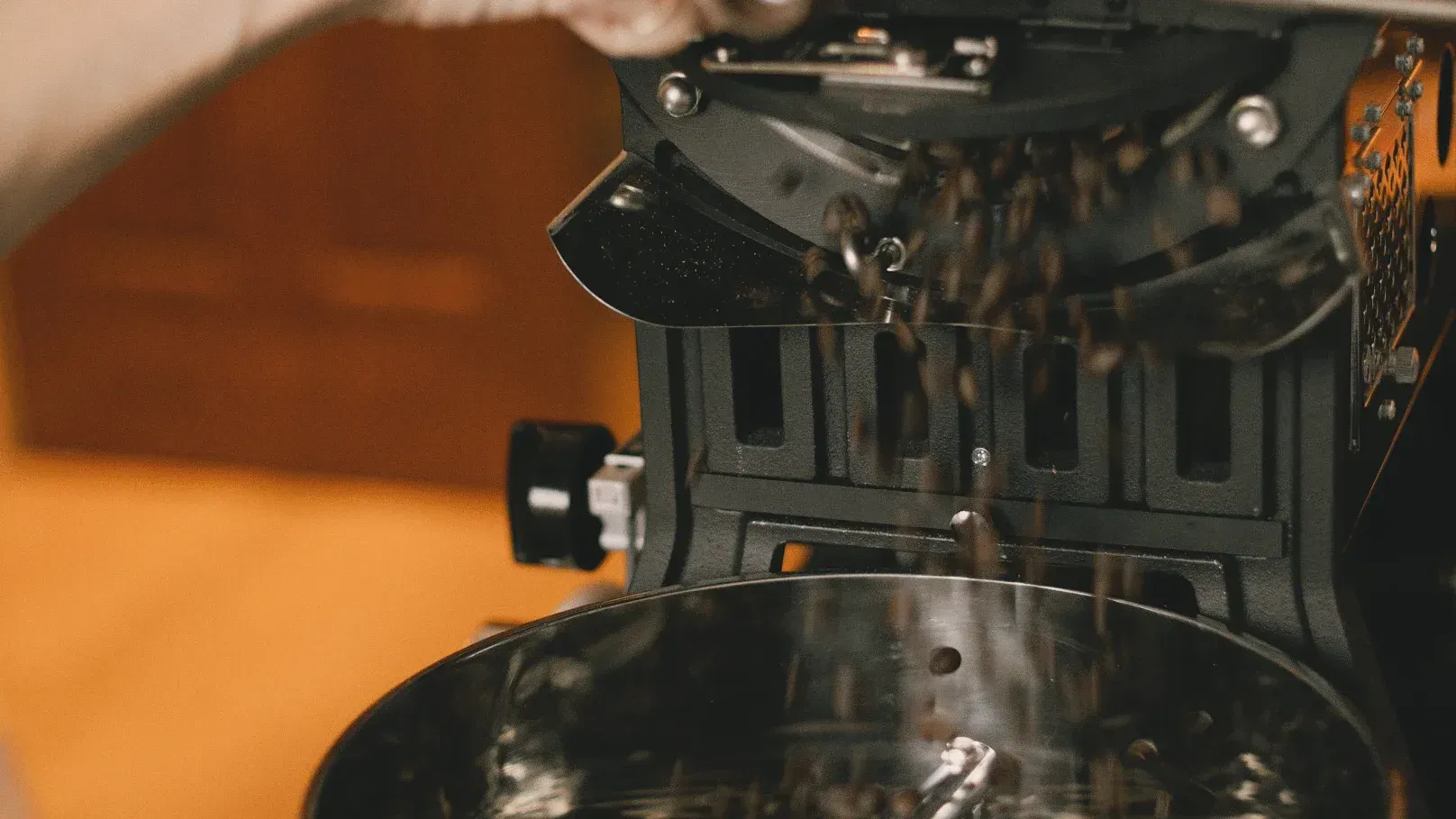
I run Slight Coffee Roastery in Osaka, Japan.
In specialty coffee, we spend a lot of time talking about varieties, processing methods, fermentation, roasting, and brewing.
But there is one question I keep coming back to.
Why do we assume that green coffee should be roasted exactly as it arrives?
Coffee is an agricultural product. It is harvested, processed, dried, stored, exported, imported, and transported before it finally reaches a roastery. And yet, we roast it as it is.
This is not a criticism of producers or exporters. Moving agricultural products across the world is complex, and what I describe is simply part of that reality.
Still, I found myself wondering: could we start roasting from a cleaner point?
That question led me to begin washing green coffee before roasting — rinsing each lot, drying it fully, and only then loading it into the drum.
What the Water Shows
Once green coffee is submerged in water, interesting things begin to appear.
At first, I assumed the differences were mostly related to origin. Over time, however, I began to feel that processing method and variety often have a greater influence.
Some coffees tint the water red. Others leave a yellow hue. Some beans float. Changes that are difficult to notice in dry green coffee sometimes become visible once water is introduced.
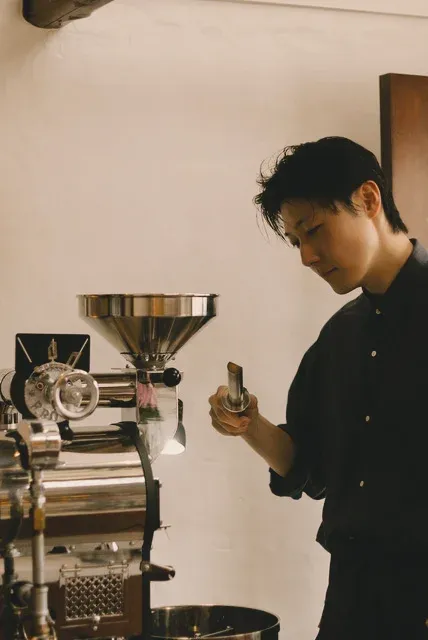
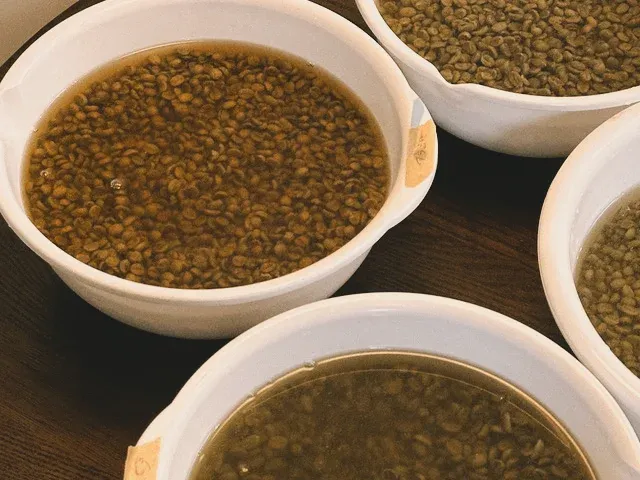
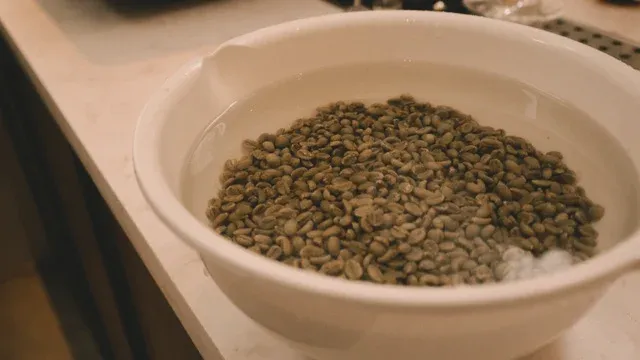
Photos: Kensho Tabuchi / Slight Coffee Roastery, Osaka
The lots we currently purchase from our importers contain very few defects. Even so, washing has become one of the ways we observe and evaluate the coffee before roasting.
I should also mention that I was not the first person in Japan to explore this idea. Hiroshi Nakano, a Japanese coffee professional who has since passed away, also practiced washing green coffee before roasting and shared his own observations and thoughts. Our motivations and approaches may not have been identical — but I often find myself reflecting on his willingness to question assumptions, observe for himself, and continue asking questions.
"Aren't You Washing Away Flavor?"
When I talk about washing green coffee, one criticism appears regularly: "Aren't you washing away flavor?"
At first, I wondered the same thing.
However, analyses of the washing water have produced some interesting observations. In one case, HPLC analysis did not detect chlorogenic acids, and glucose testing did not show significant sugar loss. At the same time, polysaccharides were detected using the phenol-sulfuric acid method.
I cannot fully explain what that means.
What I can describe is what we observe in the cup. In our tastings, washed coffees tend to maintain clearer flavor definition as they cool. The finish often feels cleaner and more transparent.
Even more interesting is what happens during aging. In our experience, coffees roasted from washed green beans often take slightly longer to open up after roasting — yet several days later, they frequently present a more integrated and expressive cup.
Why this happens, I don't know. Perhaps the removal of certain compounds plays a role. Perhaps the roasting process itself is affected. Or perhaps the explanation lies somewhere else entirely.
At this point, I have more questions than answers.
A Cleaner Start, an Open Question
I do not believe that every roaster should wash green coffee. Nor do I believe that washing automatically improves quality.
But if specialty coffee values curiosity, perhaps we should spend as much time asking what can be removed as we do asking what can be added.
Read more in the free The Better Coffee Standard.
We speak often about what fermentation creates. We speak often about what processing contributes. We speak often about what roasting develops. But we rarely discuss what might be worth taking away.
Is green coffee washing really just about cleaning the surface? If it can influence flavor clarity and even the aging behavior of roasted coffee, perhaps there is still something we have not fully understood.
I do not claim to have the answer. That is exactly why I continue to wash, observe, and ask questions.
Kensho Tabuchi is the founder and roaster of Slight Coffee Roastery in Osaka, Japan. Through coffee, he hopes to create small moments for people to pause and reconnect with everyday life and with one another. He continues to explore coffee through observation and experimentation.
Support this work
If this text was useful to you, you can support Red Ink Coffee.
Contributions help cover basic infrastructure costs and keep this space independent.
Voluntary. No perks. No obligations.