Coffee People: Gideon Thembo
Gideon Thembo, barista and promoter of Rwenzori origin, Western Uganda. Four questions — everything the industry rarely stops to hear.

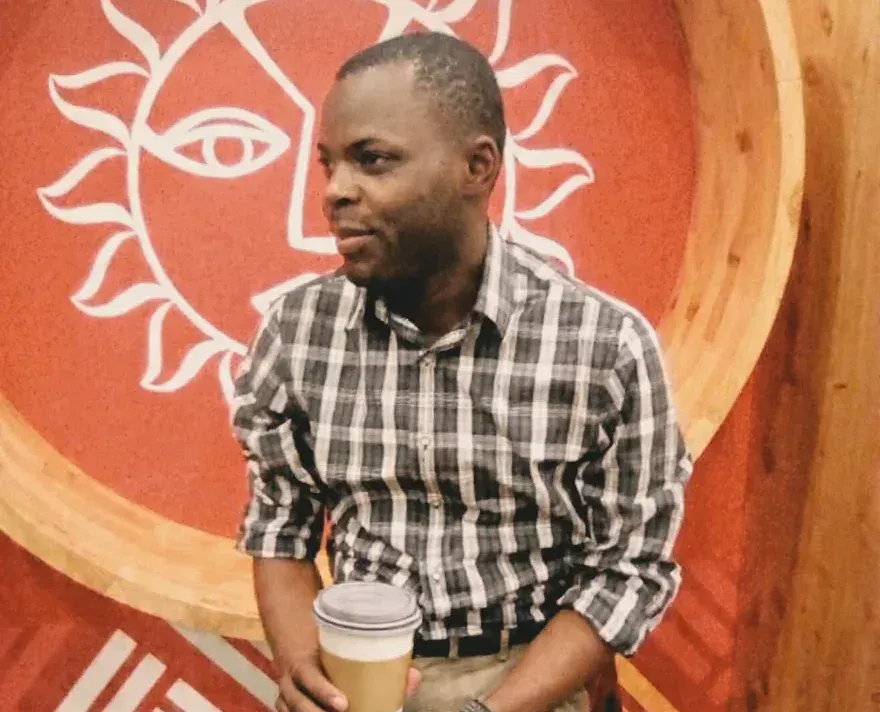
Coffee people.
The Better Coffee Standard defines it precisely: everyone whose life and work are bound to coffee, at every stage of the coffee circle — including those working under coercion, economic dependency, or without pay. Their families. Those who keep them standing.
Read more in the free The Better Coffee Standard.
The industry never stops talking about coffee. It rarely stops to talk about the people behind it. Red Ink Coffee exists, in part, to change that.
Coffee People is a series of portraits. Four questions — their voices.
Who are you and what do you do in coffee?
My names are Gideon Thembo, originally from the Rwenzori Coffee Hubs in Western Uganda. For 11 years I worked with Java House Coffee Shop, serving and sharing coffee with people every day. My role was more than serving — I was saving, mentoring, and telling the uniqueness of African coffee. I helped customers understand where their coffee comes from, how it's grown in the mountains of Rwenzori, and why it tastes the way it does. In short: I connect the farm to the cup, and the story to the people.
A moment in your work with coffee that you're genuinely proud of.
I'm proud of the day a customer who only drank "flat white" asked me, "Gideon, what's special about Ugandan coffee?" I brewed them a cup of Rwenzori AA, told them about the farmers in the foothills of the mountains, and they left saying, "I've never tasted coffee with this story." That day I realized: I wasn't just selling coffee. I was carrying my home, my people, and our farmers into that cup.
One problem you see in your part of the coffee world — and why it matters to you personally.
Farmers get the least, but do the most. In Rwenzori, farmers grow world-class Arabica on volcanic soil, but most of them still sell raw cherry at low prices to middlemen. They don't see the value when that same coffee sells for 10x in a café. It matters to me because these are my uncles, aunties, and neighbors. If they stay poor, the next generation will leave the farms. And if they leave, we lose the origin of the coffee.
What would you change if you could — and what would better look like for you?
Bring more value back to the farmer and more origin education to the consumer. What better looks like: coffee shops in Kampala and Nairobi telling Rwenzori stories on the menu; more washing stations and training so farmers can process specialty coffee themselves; direct links between cafés like Java House and farmer groups in Rwenzori. Better looks like a farmer getting a fair price, a barista who knows the farmer's name, and a customer who can taste the mountain in every sip.
You are coffee people. Tell us.
Four questions. Any language. Any format.
- Who are you and what do you do in coffee?
- A moment you're genuinely proud of.
- One problem in your part of the coffee world — and why it matters to you.
- What would you change — and what would better look like?
Include a short bio and a photo from your work environment. Send your answers to redinkcoffee@thebettercoffee.org
Support this work
If this text was useful to you, you can support Red Ink Coffee.
Contributions help cover basic infrastructure costs and keep this space independent.
Voluntary. No perks. No obligations.