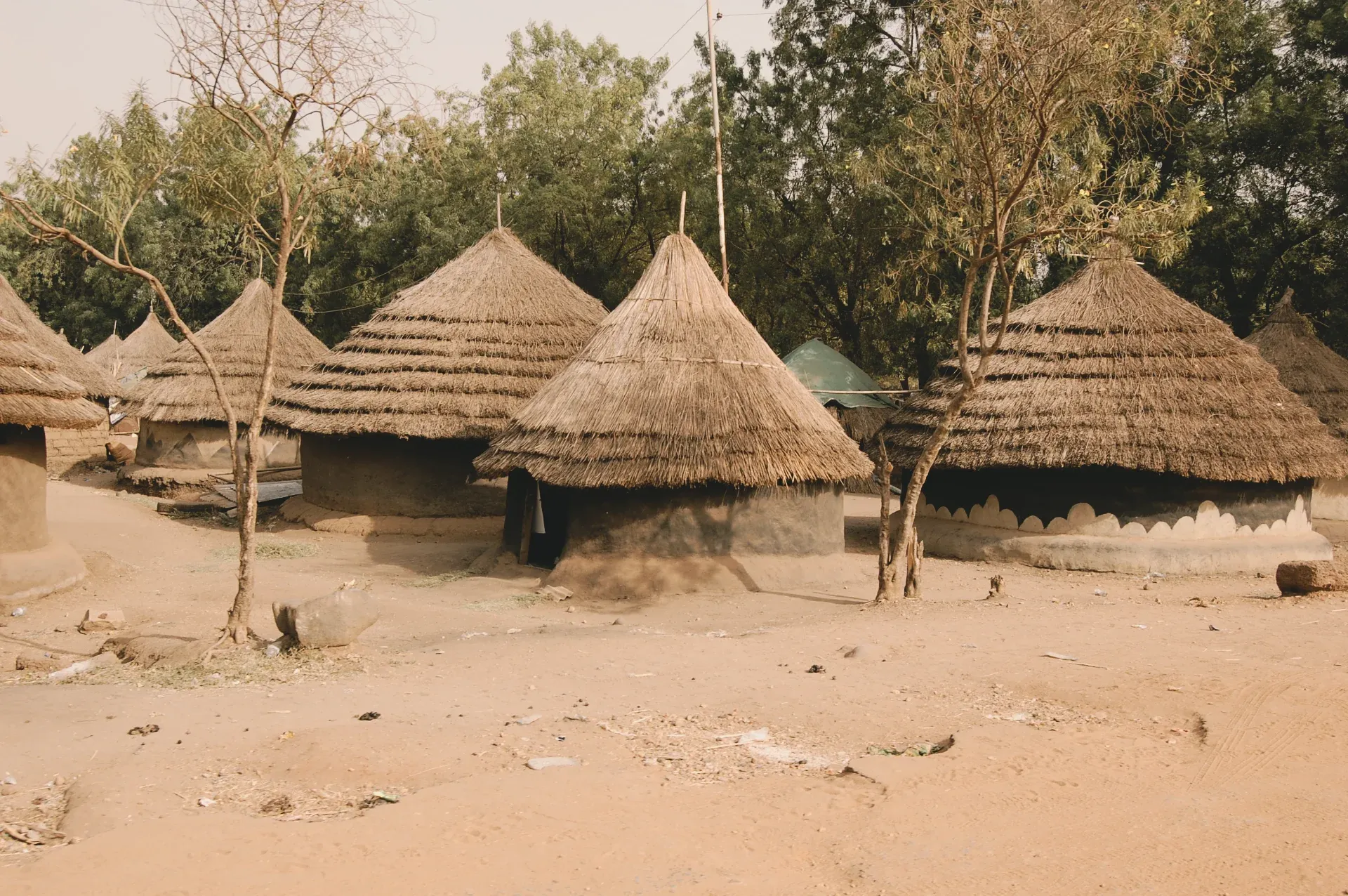
For decades we have been taught a simple story: coffee comes from Ethiopia. But plant genetics has begun to tell a more complicated version of that story. This article is about a sentence we repeat so often that we stopped checking whether it is actually true.
Where does coffee really come from?
“Coffee comes from Ethiopia.”
You can find this sentence in textbooks, barista trainings, and coffee roasters’ marketing materials all over the world. It is repeated so often that it has started to function as an obvious truth. The story is simple and easy to remember: somewhere in the Ethiopian mountains coffee was discovered, from there it traveled to Yemen, and then it conquered the world.
The problem is that this story is not about the biological origin of coffee. It is closer to an urban legend — a convenient shortcut that works well in education and marketing.
Modern plant genetics, however, has begun to tell a more complex story.
Research published in 2021 by an international team of scientists led by Dr. Sarada Krishnan (Denver Botanic Gardens, USA) and Aaron P. Davis (Royal Botanic Gardens, Kew, United Kingdom) suggests that one of the key regions in the origin of Coffea arabica may lie on the Boma Plateau in what is now South Sudan. Genetic analyses showed that wild arabica populations from this region are distinct from those known in Ethiopia or Yemen, and represent a unique genetic pool that may be crucial for the future of the species.
The Coffee Industry’s Educational Formula
The coffee industry likes simple stories. In trainings and presentations the same scheme often appears:
Ethiopia — the birth of coffee
Yemen — the first cultivation
Europe — global popularity
It is an elegant narrative that fits neatly into a few presentation slides. The problem is that it merges three very different phenomena into a single story.
The first concerns plant biology.
The second concerns the history of agriculture.
The third concerns the history of trade and culture.
When these layers collapse into one narrative, an educational shortcut emerges: Ethiopia as the “birthplace of coffee.” It is not entirely wrong — but it simplifies reality.
Plant genetics has begun to take this legend apart. Instead of one romantic origin story, a more complex picture emerges: wild arabica developed across several regions of East Africa, and some of the most genetically diverse populations may occur on the mountain plateaus of South Sudan.
It is there that researchers found wild Coffea arabica populations with exceptional genetic diversity — a characteristic that in evolutionary biology often points toward the region where a species first emerged.
What Science Actually Found
Research published in 2021 by Sarada Krishnan, Aaron P. Davis, and their collaborators added something that had long been missing from the history of coffee: a broad genetic analysis of wild Coffea arabica populations across different parts of East Africa.
During field expeditions, the scientists collected samples of wild arabica, including populations from the Boma Plateau in South Sudan. They then compared these samples with genetic material from Ethiopia, Yemen, and coffee collections preserved in gene banks and research institutions around the world.
The results were striking. Arabica populations from the Boma Plateau proved to be genetically distinct from those known in Ethiopia or Yemen. In addition, they showed a high level of genetic diversity — a characteristic that evolutionary biology often associates with regions where a species may have originated.
Based on these findings, the researchers proposed that the Boma Plateau in present-day South Sudan could be one of the key regions in the evolutionary history of Coffea arabica. This does not mean that Ethiopia or Yemen lose their place in the story of coffee. It means, rather, that the biological roots of this plant may be more complex than the popular narrative of a single birthplace suggests.
The Problem the Coffee Industry Rarely Talks About
This discovery matters not only for the history of coffee, but also for its future.
Today, arabica is a crop with extremely limited genetic diversity. Most of the coffee grown around the world descends from a small number of genetic lineages that have been reproduced and spread across different regions for centuries.
Such uniformity has serious consequences. Plants with a narrow genetic base are more vulnerable to disease, climate change, and environmental stress. Agricultural history offers many examples of crops that became highly susceptible to pathogen outbreaks or sudden environmental shifts for exactly this reason.
This is why wild populations of Coffea arabica are so important. They may contain genes for resistance to disease, drought, or temperature changes — traits that could prove critical for the long-term stability of global coffee production.
In that sense, the Boma Plateau is not just a curiosity for coffee historians. It may be one of the most important regions for the future of the entire species.
The Tragedy of the Place of Origin
The story of the Boma Plateau has another layer — a far less romantic one.
Over the past decades, this region has experienced armed conflict, political instability, and growing pressure on the natural environment. The forests where wild Coffea arabica grows are gradually being transformed by deforestation, local agriculture, and landscape degradation.
For scientists, this creates a very concrete problem: access to these areas is now extremely limited. Field expeditions that were still possible a decade or two ago have, in many cases, become difficult or impossible to carry out.
This leads to a question that sounds almost unbelievable when we are talking about one of the world’s most important crop species: what is the current state of the wild arabica populations on the Boma Plateau?
Some researchers openly admit that their present condition remains poorly documented.
Borders That Did Not Exist
When we try to tell the story of coffee, it is easy to fall into the trap of modern maps.
We say: Ethiopia. South Sudan. Yemen.
For plants, however, such borders do not exist.
The border between Ethiopia and South Sudan is a creation of modern states. It was drawn by people relatively recently in the region’s history. At the time when Coffea arabica was spreading across the ecosystems of East Africa, neither contemporary states nor their borders existed.
Coffee seeds could travel with wind, water, or animals. Plant populations could appear, disappear, and move across entire mountain ranges and forest landscapes.
For this reason, attempts to assign a “nationality” to coffee often reveal more about our desire for simple stories than about the biology of the plant itself.
The biological origin of coffee does not have to align with the borders of countries — especially those that were created thousands of years later.
Ethiopia and Yemen — Where Coffee Entered Human History
This does not mean that Ethiopia or Yemen lose their importance in the story of coffee. Quite the opposite. If the region of present-day South Sudan may be one of the key areas in the biological origin of Coffea arabica, Ethiopia and Yemen tell the story of how coffee entered a relationship with people.
In the forests of Ethiopia, coffee existed for centuries as a plant gathered and used by local communities. Some of the earliest known practices associated with coffee developed there — long before it became an organized agricultural crop.
Yemen played a different, but equally crucial role. It was there that coffee was transformed into a durable farming system.
Farmers in Yemen’s mountain regions began planting coffee trees on stone terraces and developing irrigation systems that allowed the plants to survive in the dry climate of the Arabian Peninsula. This created the agricultural infrastructure that turned a wild forest plant into a managed crop.
With cultivation came trade — first regional flows across the Red Sea between Ethiopia and the Arabian Peninsula, and later long-distance commerce through ports such as Mocha to the Ottoman Empire, India, and Europe. By this point, however, the story had already shifted. It was no longer about the biological origin of coffee, but about agriculture, exchange, and human organization.
In that sense, if East Africa tells the story of coffee’s biological beginnings, Ethiopia tells the story of its early relationship with people, and Yemen tells the story of the moment when coffee became a crop, a commodity, and part of the global world we know today.
The Myth Machine of the Coffee Industry
Why, then, do most coffee stories begin with Ethiopia?
One reason is the human preference for simple narratives. The coffee industry — like many others — often reduces complex biological and historical processes to a few easy-to-remember points.
Out of this comes an elegant storyline: Ethiopia as the birthplace of coffee. But when something in coffee is repeated long enough, it eventually begins to sound like a fact.
Such a story works well in marketing. It is simple, memorable, and allows strong symbolism to form around the idea of “origin.” The problem is that the real history of coffee is far more complex.
It involves wild plant populations, shifting ecosystems, the development of agriculture, trade networks, and culture. In such a history, there is no single moment of birth and no single place of beginning.
This is why coffee education often repeats stories that are easier to remember than to verify.
What We Should Actually Care About
If research on the origin of Coffea arabica teaches us anything, it is this: the history of coffee is inseparable from its future.
First — the protection of wild populations.
Wild coffee trees represent an essential genetic resource that may help the species survive disease, climate change, and environmental stress.
Second — access to scientific knowledge.
Research on coffee is conducted in botanical gardens, laboratories, and research institutes around the world, yet its findings often remain locked inside specialized publications. Making this knowledge accessible is a condition for honest education in the coffee industry.
Third — honesty in telling coffee’s story.
The history of this plant includes ecology, agriculture, trade, and culture. Reducing it to a single legend erases that complexity.
Telling the story of coffee responsibly means respecting science, the landscapes where this plant evolved, and the people who work with it.
Arabica Did Not Begin as a National Story
It was not “Ethiopian,” “Sudanese,” or “Yemeni.” It was a plant — one of many in the forests of East Africa, dispersed by animals and moving across landscapes shaped by climate and time.
Only later did people enter the story: farmers who began to cultivate it, merchants who traded it, and ports that turned it into a global commodity.
Today we know that the history of this plant is more complex than the popular narratives suggest. Genetic research indicates that the region of the Boma Plateau in present-day South Sudan may have played a key role in its evolutionary history.
At the same time, wild populations of Coffea arabica remain vulnerable to environmental pressure and landscape change.
This means that the question of coffee’s origin is not only about the past.
It is possible that the question itself has been framed incorrectly.
The issue is not only where coffee began.
The real question is whether the places where it began still exist — and why, as a species, we so often allow them to disappear.
Support this work
If this text was useful to you, you can support Red Ink Coffee.
Contributions help cover basic infrastructure costs and keep this space independent.
Voluntary. No perks. No obligations.
Acknowledgment
The research referenced in this article was conducted by an international team of scientists: Sarada Krishnan (Denver Botanic Gardens, Denver, USA), Solène Pruvot-Woehl and Tim Schilling (World Coffee Research, Portland, USA), Aaron P. Davis and Justin Moat (Royal Botanic Gardens, Kew, United Kingdom), William Solano (Centro Agronómico Tropical de Investigación y Enseñanza – CATIE, Turrialba, Costa Rica), Amin Al Hakimi (Faculty of Agriculture, Sana’a University, Yemen), and Christophe Montagnon (RD2 Vision, Montpellier, France).
Their work provides one of the most important contemporary insights into the biological origins of Coffea arabica and highlights the critical role of wild populations for the future of coffee.
The full study is available at:
https://www.frontiersin.org/journals/sustainable-food-systems/articles/10.3389/fsufs.2021.761611/full