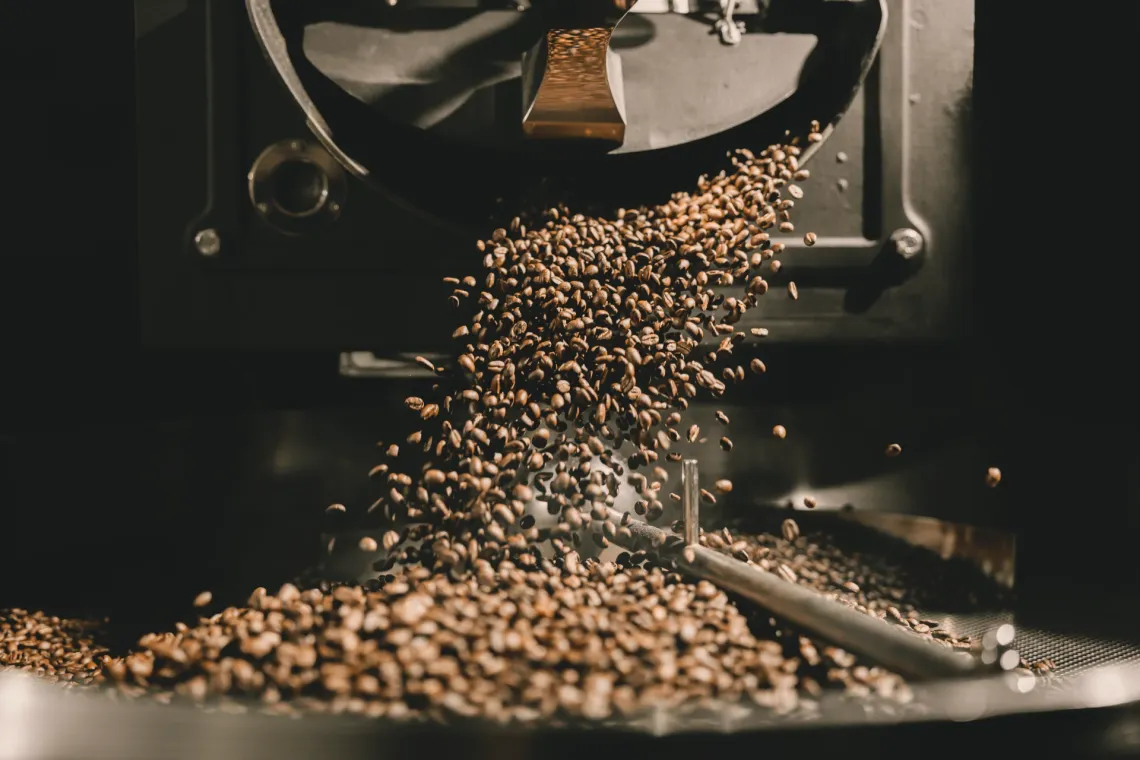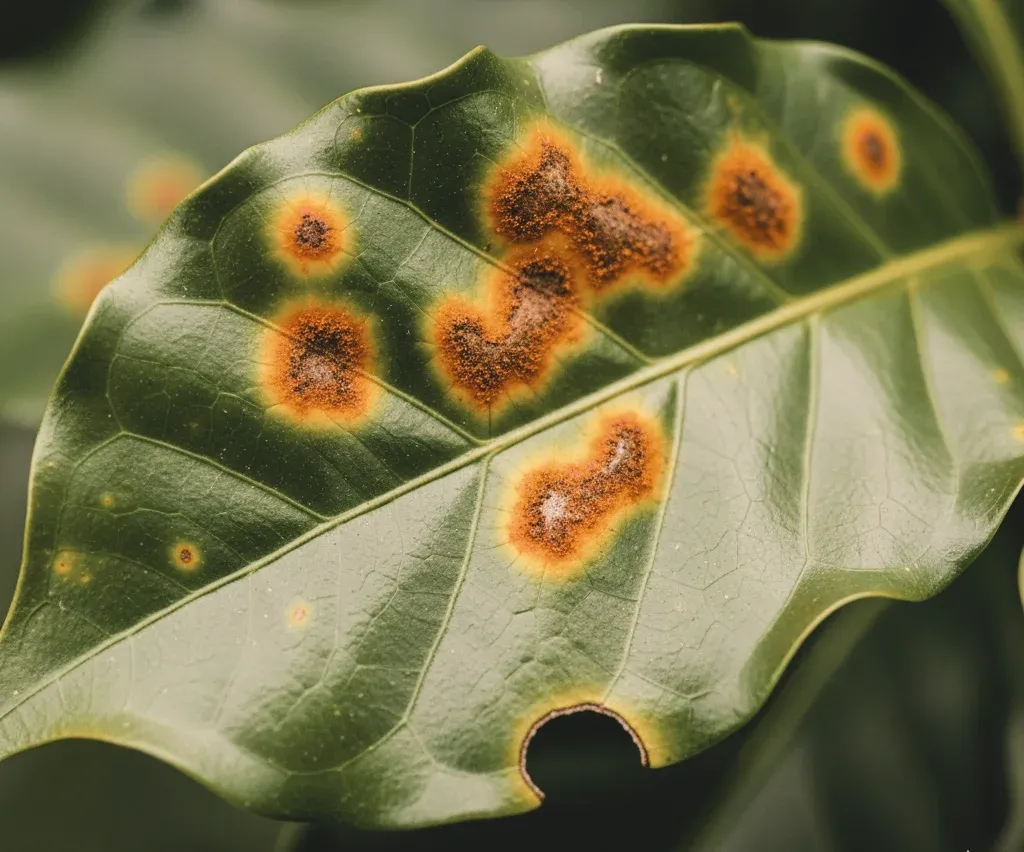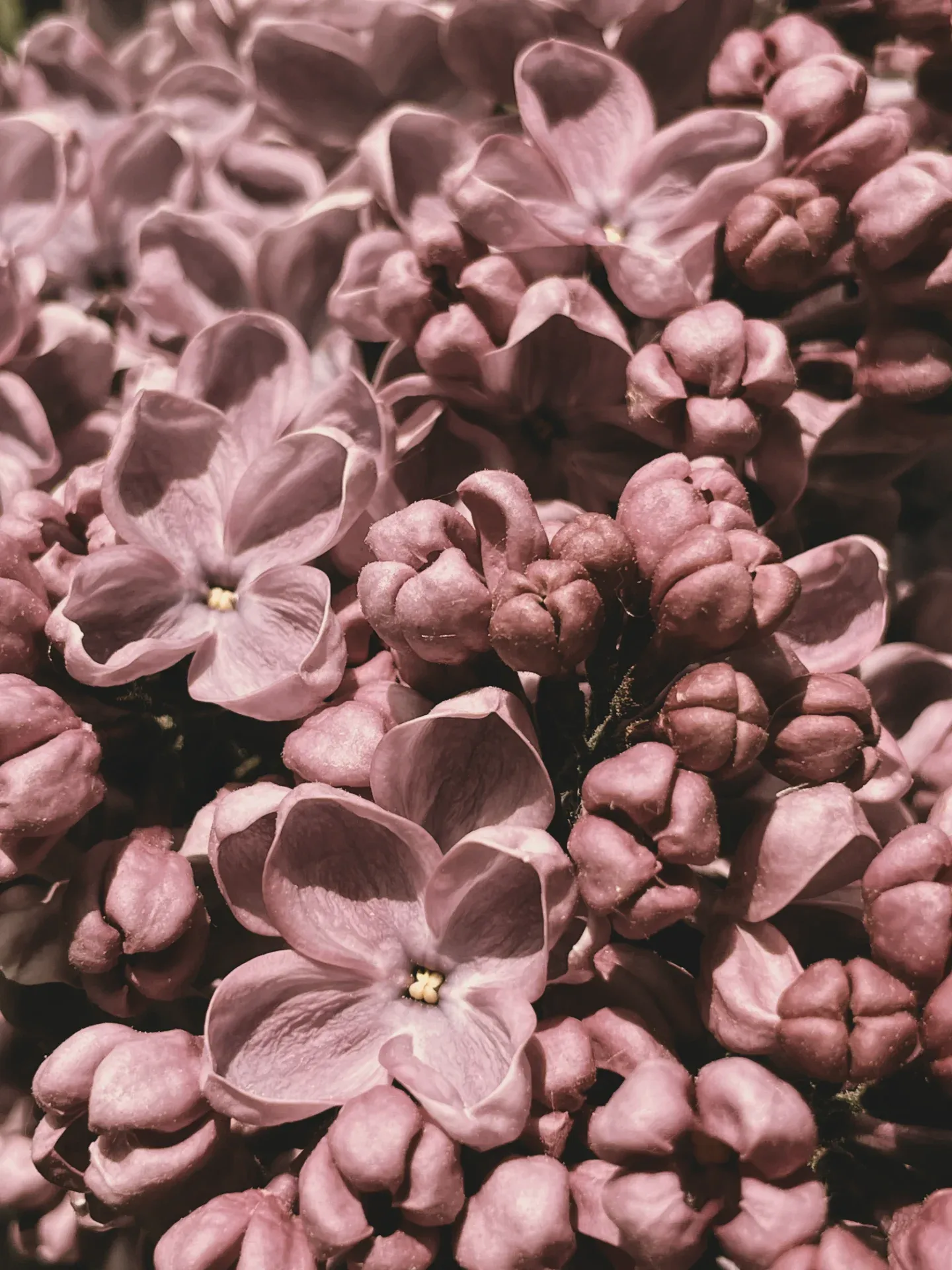
A blooming lilac bush. Brewing coffee. A public restroom hidden behind a door you’d rather not open. The same aroma.
Indole, skatole, p-cresol — floral in a whisper, fecal in a shout.
Biology writes the script, roasting directs the scene, and your brain decides whether to applaud or grimace. This is a story about dose, context, and peculiarities. A real scandal in the nose.
In this text, we move at the intersection of human olfactory perception, sensory analysis practice, and coffee chemistry (but also lilac and excrement). Scientific terms will appear—not to be memorized, but to help understand the mechanisms at work. These and related topics are developed within The Curriculum, including The School of Percept and Compound.
Part I — The Paradox of Aroma
This film exposes the gap between the façade of normality and the evil hidden underneath. I experience that opening scene from David Lynch’s classic through smell as well. The scent of warm summer air in idyllic American suburbs, the aroma of fragrant flowers drifting in the breeze. Exhaust fumes from a fire truck, the stuffy air of a house during a crime show, the sweat of Beaumont having a heart attack while watering the lawn. The smell of wet grass and soil crawling with beetles. Can you imagine a coffee described with such aromatic descriptors?
My only complaint to the director would be that he didn’t choose lilacs instead of poppies and tulips. We would then smell either excrement—or beautiful floral notes.
But let’s get to the point: aromas play tricks in our heads.
Let’s talk about three masters of aromatic paradox: indole, skatole, and p-cresol.
In lilac and jasmine they add sensual depth; in feces they seize your nose completely. In roasted Arabica they appear only in trace amounts, but alongside linalool, geraniol, and phenethyl alcohol they build floral impressions, and together with norisoprenoids such as β-damascenone they contribute honeyed notes.
How Smell Becomes Feeling Before Thought
Is the seductive aroma of floral coffees and the repulsive stench of a restroom really the same thing? Here’s how it works at the level of human perception.
In short: volatile aroma molecules glide across the mucous film of the olfactory epithelium and dock with receptors embedded in sensory neurons. Each receptor recognizes a slice of chemical space—like reading hundreds of “dialects” of a single language.
This is a fast lane for axons: signals converge in the glomerulus in the olfactory bulb, then move on to the piriform cortex, responsible for pattern recognition; the amygdala, which assigns emotional valence (whether something feels pleasant or repulsive); and the hippocampus, where memory is accessed.
The reaction of our nose and brain is so fast that you feel and respond to a smell—you flinch, soften, smile—before you can name it.
What’s more, chemistry and neurology don’t have the final word in olfaction. Through—or thanks to—cultural context and our preferences and expectations, different people can react in different ways. You might call the same volatile compound “aged cheese” or “socks,” right? It’s no different with lilac or jasmine—or with shit.
Suggestion plays a role here, too. The language of description—in tables, on packaging, in communication—sets the perceptual frame in which a smell is read.
Meanwhile, Sensory Justice, one of the values of The Better Coffee, requires us to name descriptors as they are. Without embellishment, opportunism, or bending sensory reality.

Part II — Trick or Treat Molecules
Indole: the Secret of Jasmine, the Signature of Shit
Indole is paradox embodied. It is a small ring-structured chemical molecule (C₈H₇N).
- In lilac and jasmine flowers, it can account for roughly 1–3% of the volatile aromatic bouquet.
- In coffee, it appears in trace amounts, among others as a result of amino-acid transformations—especially tryptophan, present in green coffee as a precursor—occurring during processing and roasting.
- In feces, indole originates from bacterial enzymes breaking down amino acids in the gut.
At trace concentrations, indole is perceived as floral, reminiscent of lilac. At slightly higher—yet still very low—concentrations, the same compound turns into the aroma of sewage and decay, perceived as animalic.
We have an exceptionally low perception threshold for indole. The fact that its sensory effect shifts so dramatically between microgram and milligram quantities has an evolutionary explanation: the pleasant scent of nectar from pollinated flowers turns into a warning signal for filth and pathogens dangerous to health.
In coffee—especially in washed coffees from Colombia, Panama, or Ethiopia—the presence of indole enhances the perception of floral complexity.
It can also—among other reasons due to uncontrolled fermentation—densify the profile of roasted coffee toward honeyed notes, or be interpreted as fecal or stable-like.
Imagine such ambiguity during cupping: one person calls the note floral, another calls it shit. Who is right? Possibly both. It is the same aromatic signal, read at a different threshold and in a different context.
It’s also worth noting that indole often works synergistically: in combination with phenethyl alcohol (2-phenylethanol)—responsible for rose-like notes in coffee—it intensifies the perception of jasmine-like florality.
Skatole: the Trickster
A true provocateur among aromas. The name of this compound comes from the Greek skatos — dung. Skatole (3-methylindole, C₉H₉N) is also a ring-structured odorant molecule, a close relative of indole.
It is present in human and livestock feces. Mere trace amounts—on the order of parts per trillion—are enough for the nose to recognize it instantly and trigger a reaction of disgust.
And yet, perfume houses buy skatole by the kilogram. At near-homeopathic doses, it lends floral compositions an indispensable depth. Jasmine absolute, a highly concentrated aromatic extract from jasmine flowers, contains 0.1–0.5% skatole. Without it, jasmine would smell like soap; with it, jasmine becomes real, alive—almost erotic.
In coffee, skatole is most often found right at the edge of the human perception threshold. However, in coffees with uncontrolled or prolonged fermentation—a pattern visible in some current specialty-market trends—its signal can be amplified and revealed during roasting.
Unlike indole, skatole does not function in coffee as a component that builds a positive aromatic profile. From the perspective of Sensory Justice, it should be named for what it is: an animalic defect. In coffees dominated by fermented-fruit profiles, however, confusion is easy—and the very same note may be described in positive terms, for example as “funky.”
p-Cresol: a Horse Stable in the Cup
The last of the three masters of aromatic paradox—p-cresol (4-methylphenol, C₇H₈O)—is avoided even by perfumers.
This molecule, present in whisky, is responsible for its medicinal character; in wine, it is an unambiguous signal of spoilage caused by Brettanomyces.
In coffee, we associate p-cresol with a “phenolic” defect—tar, rubber, disinfectant. It appears most readily in very dark roasts, where it can accumulate at levels around 0.5–1 mg/kg. At such concentrations, the aroma is unmistakable, dominant, and nearly impossible to mask.
In feces, p-cresol occurs at hundreds of times higher concentrations. And if that’s any consolation—in lilac, you’ll encounter it only in trace amounts.
Part III — The Cultural Paradox
Culture: From Perfume to the Latrine
The same set of molecules changes status with context: in jasmine perfumes, indole is read as sensual luxury; in a restroom, it becomes a sign of neglect. Skatole builds depth in absolutes, but in a pigsty it is unbearable. p-Cresol in whisky is interpreted as peaty smoke; in wastewater, as pure waste.
Let’s stay with p-cresol for a moment. Some traditions actively celebrate its ominous notes. Peated Scotch whiskies, smoked and long-fermented cheeses, rustic Belgian ales—none would be themselves without it.
There are, however, aromas that are almost universally rejected. Isovaleric acid triggers an immediate “locker-room flashback”—cross-cultural studies show it ranks among the worst-rated smells regardless of region. By contrast, there are near-universal favorites: vanilla and fruity esters.
And yet culture can still shift the boundaries of tolerance. In Southeast Asia, durian—sulfurous, oniony—is a beloved “king of fruits”; in Scandinavia, fermented herring is heritage cuisine. In France, blue cheese is refined; in the United States, it’s often simply “moldy.”
All of this shows that culture co-determines whether a given aroma is perceived as a flaw or as a virtue.
The same applies to coffee: an Ethiopian natural saturated with phenethyl alcohol may be celebrated in Addis Ababa as “beautifully floral,” labeled “exotic” in New York, and rejected by a Brazilian producer as a “fermentation defect.”
Go further: a coffee producer may smell their lot and say, “smoky, strong, very good.” A cupper will describe the same thing as a “phenolic defect.” That shift changes the power relation. And the price.
It would be fairer, however, to name the effect of a given compound according to its actual chemical capabilities, not solely according to the position of the person describing it.
Molecules have no opinion. They simply volatilize.
Humans provide the frame.
Aroma Is Status
Coffee is memory brewed into a volatile form.
It takes just one cup of a floral coffee to fall in love with such profiles and want to return to them—or to avoid them entirely. Both reactions are understandable. Floral aroma always carries a trace of decay, a reminder of impermanence and transience.
Remember this, though: it is precisely that thin shadow of impurity that makes a floral scent feel real rather than sterile.
With coffee, you have a choice—you can decide what you drink. You can avoid unpleasant aromas or simply ignore them.
But people do not always have that luxury. Many coffee people live in areas—often poor and marginalized communities—exposed to persistent odors from industrial facilities, manure lagoons, or waste dumps. Long-term exposure to such smells harms health, dulls the sense of smell, and undermines dignity. Meanwhile, the very same aromatic molecules are sold in wealthy societies as perfumes—stylized, purified, and packaged as luxury.
So we return to the starting point: to jasmine, to coffee, to what we would rather name differently. The same molecules—indole, skatole, p-cresol—hover over the flower, the cup, and the latrine. They have no intention and no morality. They are simply chemistry in motion.
If coffee is to be more than an aesthetic experience, we must accept its full truth: that the beauty of aroma is born at the boundary between purity and decay, and that responsibility begins with the language we use to speak about it. Because between jasmine and shit, it isn’t the molecule that differs—it’s the context.
Support this work
If this text was useful to you, you can support Red Ink Coffee.
Contributions help cover basic infrastructure costs and keep this space independent.
Voluntary. No perks. No obligations.