Have you ever wondered when — counting from the roast date — you should drink your coffee? Science suggests there is more at play than it might seem.
In the coffee world, many myths circulate: that light roasts “for filter” can be drunk after three days, while darker roasts “for espresso” need two weeks. The problem is that these are formulas, not knowledge — and coffee chemistry does not operate according to such divisions. Read on to understand why coffee sometimes tastes unclear, sharp, or chaotic, and at other times more defined and pleasant.
“Coffee freshness” is a linguistic shortcut. It is not a simple function of time counted from the roast date alone. In practice, it attempts to describe complex chemical processes that take place in coffee after harvest and after roasting. A key role is played here by sulfur compounds — DMS, MeSH, and DMDS. Understanding them helps both in everyday brewing and in professional work at the production stage (post-harvest processing) as well as in roasting.
Coffee, Earth, and a Distant Planet
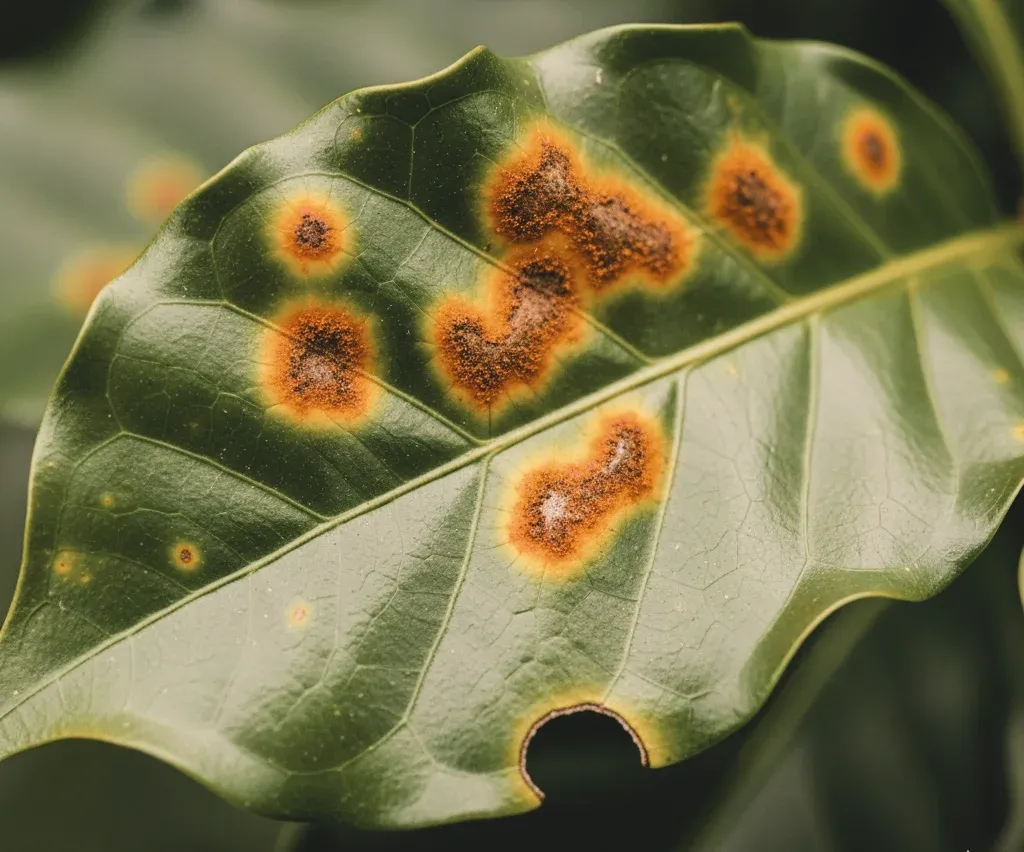
DMS, MeSH, and DMDS remind us that coffee is an expression of life on Earth. They are traces of coffee fruit (coffee berries) ripening, fermentation, green coffee drying, and finally roasting. To a large extent, they are responsible for what we describe as coffee freshness.
Outside the coffee world, DMS and DMDS most often appear in discussions of ocean biology and atmospheric composition. On our planet, they are concrete signals of living processes — traces of the metabolism of plankton and zooplankton.
In 2025, astronomers reported a possible detection of elevated concentrations of DMS and DMDS on the planet K2-18b, located 124 light-years away. The planet is thought to be potentially covered by oceans, and beneath its dense atmosphere there may exist an environment conducive to life — a possibility suggested precisely by the molecules discussed in this text.

An Organic Chemistry Primer
To better understand the role these compounds play in creating and maintaining the freshness of your coffee, let us look at them outside the context of coffee — as they naturally function in the worlds of chemistry and biology.
DMS — dimethyl sulfide (C₂H₆S)
A volatile sulfur compound commonly present in the natural environment. It is formed primarily through biological processes, especially as a result of marine plankton metabolism. It is released into the atmosphere by living organisms as a protective and adaptive mechanism.
MeSH — methanethiol (CH₄S)
The simplest sulfur compound in this group of volatile compounds. It is formed naturally during the breakdown of sulfur-containing amino acids in biological processes. It occurs in anaerobic environments as well as during fermentation and the decomposition of organic matter. It is highly reactive and short-lived; it readily undergoes oxidation.
DMDS — dimethyl disulfide (C₂H₆S₂)
A sulfur compound formed through the oxidation of other sulfur compounds, including methanethiol. It is chemically much more stable than MeSH and reacts more slowly.
Batch Drop and Degassing
DMS is already present at the green coffee stage — as a result of biosynthesis, fermentation, and microbial activity during processing and drying. It is, quite literally, a consequence of life. Importantly, DMS is volatile, yet sufficiently stable to survive the journey from the farm to the roastery.
From this point on, three fundamental concepts from chemistry and physics become relevant: volatility, reactivity, and oxidation. They describe how molecules behave in coffee after roasting and how easily they change over time.
During coffee roasting, many chemical processes take place. In the context of freshness, two of them are crucial:
Formation of dimethyl sulfide (DMS)
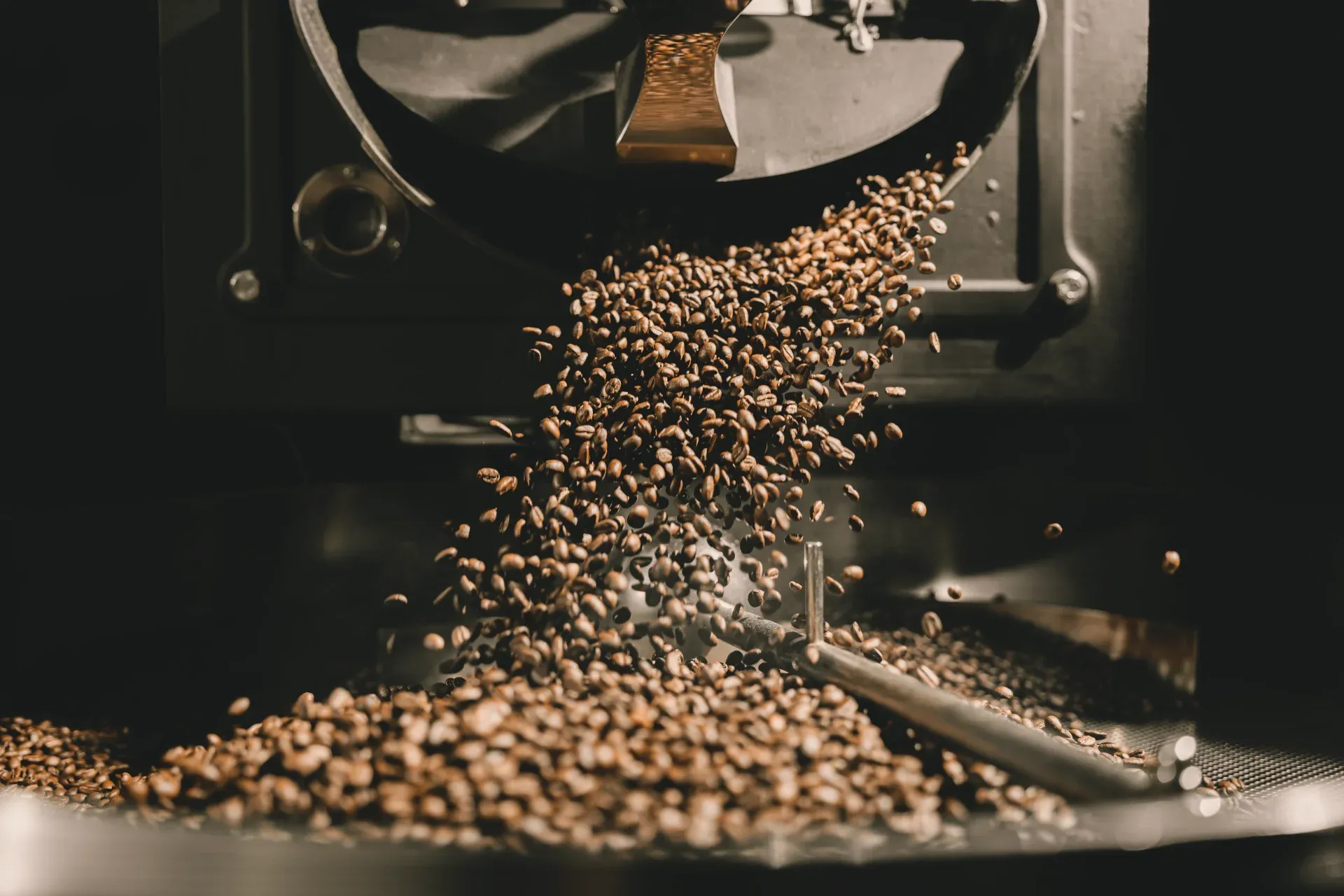
DMS is formed and temporarily increases during roasting. Due to its very high volatility, it evaporates almost immediately — a significant portion disappears while the coffee is still in the roaster or just after batch drop. The small amount that remains in the bean after roasting sets the initial state of the coffee’s aromatic system.
Formation of methanethiol (MeSH)
MeSH is formed only during roasting, at high temperatures, due to the presence of sulfur-containing amino acids in green coffee, such as methionine. It is a highly reactive and short-lived compound that serves as a starting point for further transformations after roasting.
If we observe a clear increase in DMS, it almost always indicates that roasting conditions also favored the formation of MeSH — not because one compound is converted into the other, but because both result from the same set of reactions occurring at high temperature.
DMDS, by contrast, requires oxygen and time. Dimethyl disulfide is formed only after roasting, as a result of the oxidation of methanethiol. It is chemically much more stable than the other two compounds discussed.
The processes leading to the formation of DMDS begin already during bean cooling and then continue throughout storage and degassing. At the same time, we observe a decline in MeSH content in the post-roast phase, progressing over the following days.
The key point: the relationship — which can be monitored — between MeSH and DMDS after roasting allows us to describe coffee freshness in the language of chemistry, rather than dates or simplified rules.
This understanding comes, among others, from research conducted by scientists at the Zurich University of Applied Sciences and the Nestlé Research Center.
From the Roaster to the Universe of Flavor
It is true that coffee freshness influences its flavor.
From the moment roasting ends and the beans cool down, coffee remains a dynamic material in which several processes occur simultaneously: oxidation, CO₂ degassing, and the migration and release of volatile compounds. This is a continuous chemical evolution of the aromatic system. Nothing happens suddenly.
To summarize: the higher the ratio of DMDS to MeSH, the further the coffee is from the moment of roasting in chemical terms. This means that the aromatic system shifts from a phase of high reactivity, typical of the first days after roasting, toward greater stability. Freshness does not disappear abruptly or “end” at a single point — it changes its stage, as some compounds fade while others take on a dominant role in shaping the sensory profile. This cannot be captured in days since roasting, but only in the concentrations of substances.

What can measurements of individual compound concentrations and their synergies tell us?
All time ranges below are approximate and refer to typical post-roast behavior under standard storage conditions.
Higher MeSH concentrations (0-3 days)
Increase perceived aroma intensity while simultaneously reducing clarity and definition of the profile. The aroma may be perceived as sharp, aggressive, sometimes raw, green, or reductive, making precise identification of notes difficult.
Lower MeSH concentrations (3–10 days)
Do not form a distinct aroma note, but influence overall aroma intensity. The profile may appear more intense, yet remains structurally unstable and difficult to clearly resolve.
Lower DMDS concentrations (0–5 days)
Support integration and separation of flavor notes without dominating the profile. They improve clarity and readability while preserving much of the coffee’s expressive potential.
Higher DMDS concentrations (7–21 days)
Promote aroma stability and profile integration, often at the expense of fresh intensity. At higher levels, they may lead to impressions described as flattened, heavy, or sulfurous, especially with longer time after roasting.
Time-axis relationships
High MeSH / low DMDS (0–5 days)
The aromatic profile is intense, reactive, and unstable. Sharpness, lack of clarity, and poor aroma definition are common.
Decreasing MeSH / increasing DMDS (3–10 days)
Aromas begin to integrate, and the structure of the profile gains structure and readability. This transitional stage is marked by reduced harshness while maintaining relatively high aroma intensity.
High DMDS / low MeSH (7–21 days)
The profile becomes calmer and more structured, with improved clarity and balance. Overall intensity may be lower, but the coffee’s character is easier to identify.
Very high DMDS / trace amounts of MeSH (21+ days)
The aroma loses dynamism and fresh perceptual energy. The profile may appear flat, heavy, and less complex, limiting the coffee’s sensory potential.
Interestingly, sulfur compounds — depending on concentration and aromatic context — can support the perception of notes such as blackcurrant, grapefruit, or floral tones, while at other levels and relationships within the profile they may evoke associations of rotten egg, gas, or sewage.
Not Fresh, but Not Rancid
Many people confuse coffee freshness with rancidity. Rancidity refers to the oxidation of lipids (coffee oils) and is a process distinct from the previously described evolution of the aromatic system after roasting. Although it begins shortly after roasting, its sensory effects remain imperceptible at that stage. Only after a longer period — at least several weeks after roasting, under proper storage conditions — does lipid oxidation begin to introduce notes described as stale, cardboard, and rancid, leading to a real degradation of sensory quality. At an even later stage, long after the coffee has ceased to be aromatically reactive (in the DMDS–MeSH relationship), these characteristics begin to dominate the profile entirely.
Wait or Drink Right Away?
Chemistry offers several practical answers.
If you roast coffee, you can package it immediately after cooling. Use bags with a valve: this limits oxygen access and slows post-roast oxidation of MeSH into DMDS, stabilizing the aromatic system.
When should you cup?
That depends on your goal, but for comparative purposes always choose the same point after roasting — for example, day 1, 5, 15, or 25 — to maintain repeatability and refer to a comparable chemical state of the coffee.
Do not rush to ship coffee immediately after roasting. Drinking coffee with a very high proportion of MeSH is rarely beneficial for the consumer — the profile tends to be sharp, unstable, and difficult to read, even if intense.
If you are a consumer, treat the roast date as a reference point, not a rule. In practice, around 2–4 weeks after roasting is when many coffees reach their greatest aromatic clarity, regardless of roast level.
If you want to extend the duration of “freshness,” store coffee in a tightly sealed package in the refrigerator. Its prime will shift in time, but it may last for several months, provided temperature remains stable and oxygen access is limited.
And finally: do not confuse a drop in aromatic intensity with a loss of quality. This is often a sign of profile stabilization, not degradation.
Support this work
If this text was useful to you, you can support Red Ink Coffee.
Contributions help cover basic infrastructure costs and keep this space independent.
Voluntary. No perks. No obligations.