Better Means: The Planet Doesn't Negotiate
Coffee grows in the ground. That sounds obvious — until you start thinking about what we're doing to that ground.

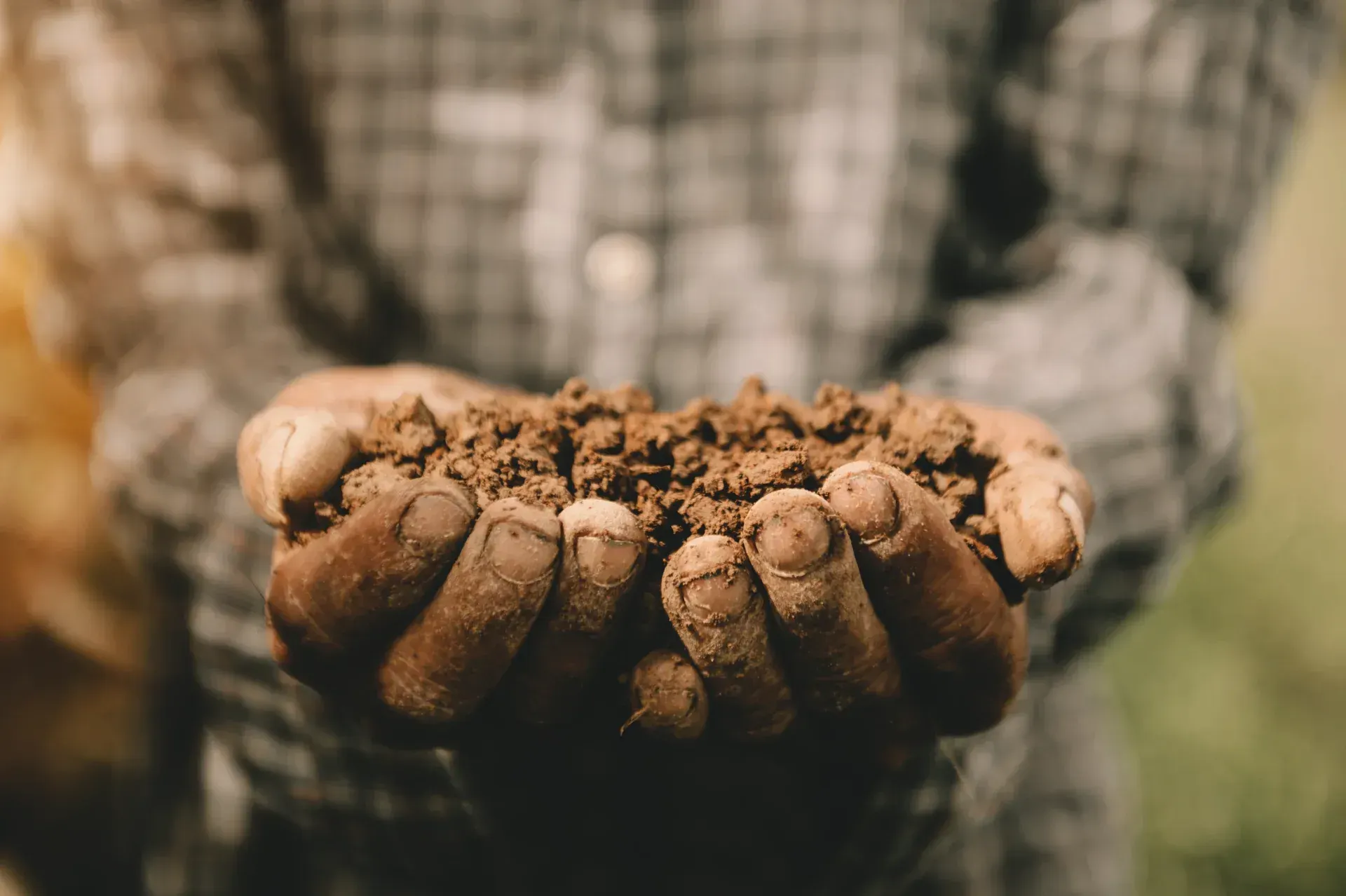
Industrial coffee farming in monocultures destroys soil — depleting centuries of accumulated humus, stripping microorganisms and nutrients without replenishment. Over time, the land stops producing without ever-increasing doses of fertilizers and pesticides.
Deforestation reshapes local and global climates, and wipes out habitat. Species with nowhere left to live don't migrate, don't magically adapt within a decade. They disappear.
Roundup. Glyphosate. Endosulfan. These aren't abstract chemical names — they're potentially carcinogenic substances found across coffee-growing regions of the world, in the soil, in the groundwater, in the bodies of plantation workers.
The effects of climate change on coffee cultivation are already visible and measurable. Unpredictable rainfall — violent downpours where steady rains once fell — destroys harvests and erodes soil. Frosts are showing up in regions that never saw them, killing coffee trees that take years to bear fruit. Rising temperatures are opening the door to new pests and plant diseases, ones previously held back by cooler climates. A longer growing season sounds like an opportunity, but in practice it means lower quality and lower yields — the tree works longer, but not better.
Planetary Care asks one question: where are the planet's limits, and are we crossing them?
The Better Coffee answers: yes, we are. And we need to stop.
Read more in the free The Better Coffee Standard.
Coffee is a fruit. You can't just swap it out for technology — though we're already trying to manufacture synthetic coffee. Coffee without a planet doesn't exist. Coffee people — pickers, processors, baristas — live in the very environments we're destroying.
We perform concern. Roasteries start measuring their carbon footprint instead of reducing it. Trade shows get sustainability zones in massive air-conditioned halls. We tell customers to bring their own reusable cup while blowing through mountains of supplier packaging at the end of every shift. We hand out paper straws and call it progress. And then the industry says: sustainable development.
An eco-friendly coffee bag doesn't change what's inside or how it got there. Ecological gestures are worth something — but only when they're real. Otherwise it's not care for the planet. It's care for the brand.
On our scale, we can do more than we think — and far less than the industry destroying this planet demands. It's time for the coffee industry to unite around real goals. The same industry that generates tens of millions of tons of waste — and that's just counting the organic.
Planetary Care in The Better Coffee means living and working within limits set by the planet — not the market. Operational compromises are on the table. Compromises on Planetary Care are not.
No biodiversity, no forests, no water — no future for this industry.
Rewilding isn't the opposite of quality. It's the condition for it. Biodiversity in coffee cultivation isn't a romantic vision. It's a practical necessity.
The planet doesn't negotiate.
Support this work
If this text was useful to you, you can support Red Ink Coffee.
Contributions help cover basic infrastructure costs and keep this space independent.
Voluntary. No perks. No obligations.