Better Means: Stop Telling Me What I Taste
Justice starts with price. Price starts with value. Value starts with words.

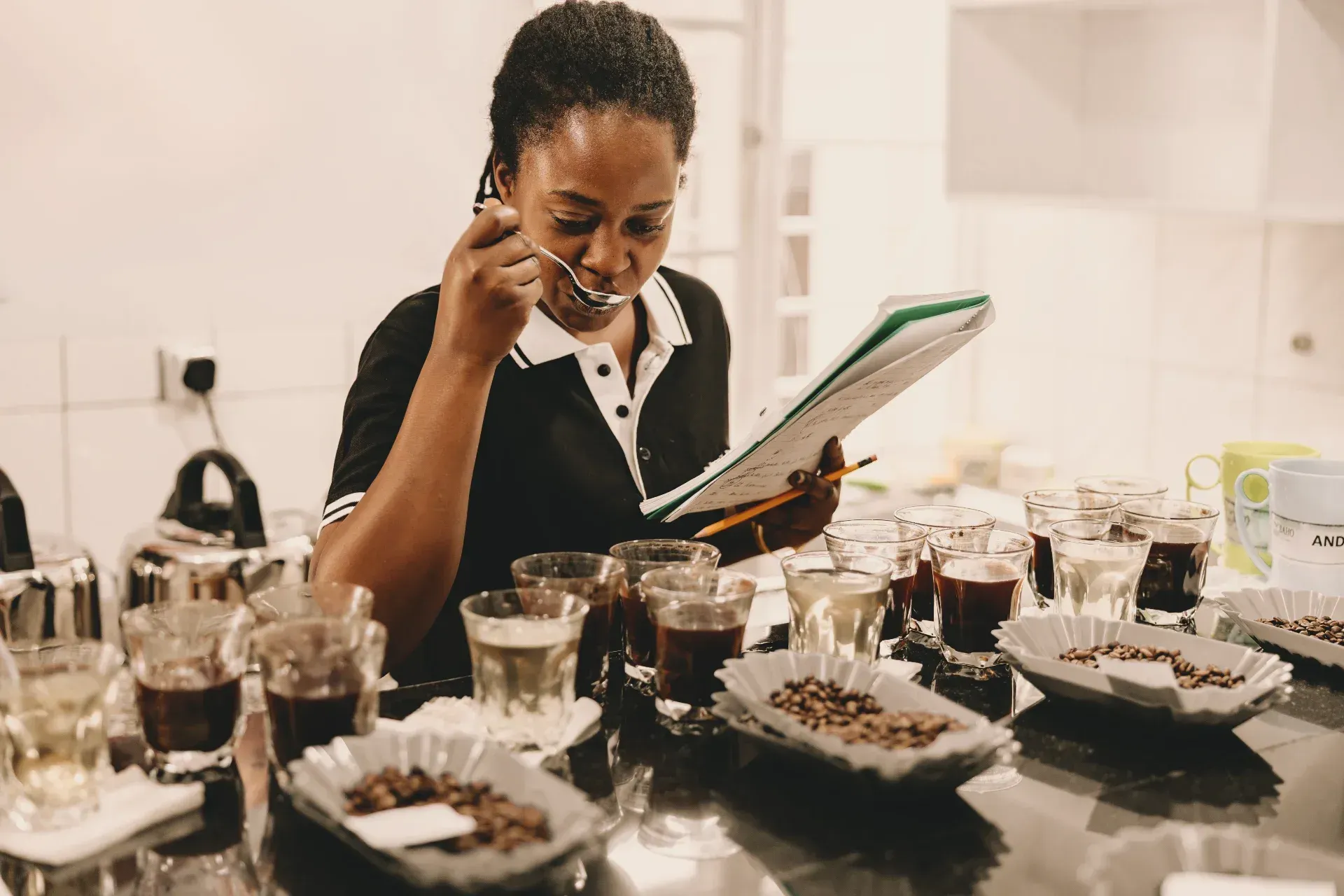
One coffee. Two descriptions:
Flavor: blood orange, blueberry, rose jam, macadamia, grape juice, Belgian praline. Pleasant aftertaste, complex and vibrant acidity, clean and smooth body.
Flavor: citrus, blueberry, nuts, chocolate. Medium aftertaste, medium acidity, clean body.
One coffee. Two stories:
Our family's history on this farm goes back to my great-grandfather. For four generations, we've honored tradition while keeping pace with the times — alongside our region's classic processing methods, we experiment with newer ones, including co-fermentation. Our coffees score above 87 points.
Our farm hasn't turned a profit in years. Others build websites and roast part of their crop to sell in retail bags — we're trying the same thing because we don't have a choice. A well-known farmer nearby sells fruit-processed coffees at high prices, so we buy overripe fruit at the market and figure it out ourselves. The base green is probably decent — a Q Grader told us a few years back that a sample scored 86.5.
How much would you pay for the first coffee? How much for the second?
You don't need to think long. The way descriptors sound sets the price — and we all know it, even if we rarely say it out loud. Blood orange and Belgian praline cost more than citrus and chocolate. Not because the coffee is different. Because the story is different. And the story belongs to whoever knows how to tell it.
Read more in the free The Better Coffee Standard.
That's pointwashing. SCA scores paired with tasting notes look like hard data. They give the impression of objectivity — quality measured, price justified. But whoever controls the narrative can bend it to their needs. Consciously or not. For profit or for survival. Either way, the result is the same: exploitation and inequality deepen, hidden behind the appearance of a fair system.
Specialty was supposed to be the answer. Coffee with strong environmental and production credentials, fairly priced, with a story worth telling. Instead, specialty is mostly a number now. A score above 80 shuts down a whole lot of questions about actual production conditions — labor, environment, economics. Price follows the score, not the cost of producing the coffee or a fair margin for the producer. Specialty legitimizes pointwashing, and pointwashing legitimizes specialty. Round and round it goes.
Exploitation runs both ways. Dazzled by a flowery description, you — as a roaster or a café — might pay well above production costs. Sticking to the second description, you might push the other side into a desperate sale below them. Coffee becomes a commodity like any other: somebody wins, somebody loses. The hierarchy greases the wheels. Those at the bottom always lose the most.
Descriptors are a relative concept. You can use them deliberately, or you can use them without thinking — driven by sensory bias, by market expectations, by hearing what you want to hear. We write clever phrases on our bags that sound like the truth. We put farmers' names on café menus as if they were responsible for what ends up in the cup. At public cuppings, we tell people what they're supposed to taste — just in case they figure out what they actually taste. The responsibility for language falls on the people who use it. And it's heavier than most of us want to admit.
Our coffees are supposed to be like couture on the pages of a fashion magazine — perfectly lit, flawless, worn by beautiful people. They're supposed to smell like designer perfume, promise an experience like one of those perfectly engineered fast-food burgers in the commercials. When they fall short — and they almost always do — the market has a full toolkit for building a façade around them. Its broken economics push us to use those tools. We reach for them reluctantly. But we reach.
Sensory justice starts where we refuse. Where we talk like the second story — things are rough, we're doing what we can, it's not getting us far. Where we stop telling people what to feel and start asking what they actually feel. Where we describe coffee for what it is — and insist that a fair price starts with the cost of production, not the elegance of a tasting note.
Language is a tool of power. But it's also a tool of truth. The choice belongs to whoever is holding it.
Support this work
If this text was useful to you, you can support Red Ink Coffee.
Contributions help cover basic infrastructure costs and keep this space independent.
Voluntary. No perks. No obligations.